I’m writing something today. Something about my experience as a writer who has started doubting herself. I was a freestyle writer before, with no fear about readers pointing out my flaws related to grammar or, in fact, anything.
English is not my first language. But I was always confident when it came to writing, even in English. It was during the end of my master’s degree when I decided to get help. My hands were full with a lot of things to do at the same time, as I was about to graduate, and my projects were yet to be completed, let alone my thesis. It was this time when I got a subscription to ChatGPT. You all might be familiar with this tool.
Initially I was planning to use it just to get information on some of the things related to my projects. But then, since I was running out of time, I started providing my draft write-up to ChatGPT or some other similar tools and got the refined version. Surprisingly, I felt like it wrote better than me. Since then, I started doubting my own writing.
Asking for help when in need is not wrong, but relying on it forever? It may not be a completely right thing to do. So the thing is, when I give an AI tool my write-up for a better or correct version, in return, I get the version that has lost my touch. The version loses originality. The originality of me.
Even if I were to ask it to just check on my grammar, it would give a version with its own touch, and I hate to admit that I liked that version better. It was only some time ago when I realized that by doing this I was also losing my originality.
So, I have decided to stop doing that. I guess if I want to check on my grammar, there are specific tools to do so. I do not need an AI tool to give its own touch to my write-ups. I believe it is not too late, and I can start over. So, I’m starting again. This write-up has a message that we should not rely on AI for something that we are already confident about. Because in the process, we may lose our creativity and perhaps the confidence too.
It felt so nice to write this random thought here and a relief that I do not need AI to check on this before I post it.
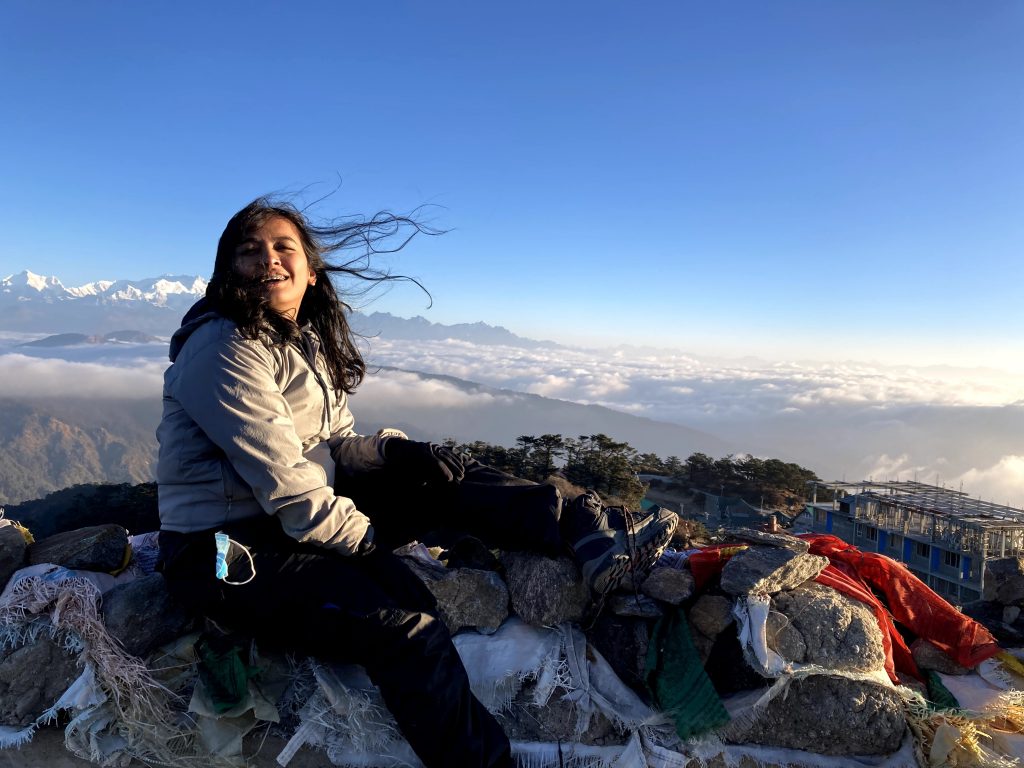
Aama Yangri is located in the Helambu area of Sidhupalchowk District, just 90 kilometers north of Kathmandu Valley. The peak’s name means mother in Nepali, and she is said to be the Hyolmo region’s dakini or guardian. The height of the summit is 3771 meters. It has recently gained a lot of attention due to the discovery of its floral route and breathtaking mountain vistas. Rhododendron, pine, and oak trees line the route. Hyolmo culture is also prevalent in the area. Sherpa, Chhetri, Tamang, and other ethnic groups live happily together. The summit is one of Langtang National Park’s jewels.
General Information
Altitude: 3,771 m
District: Sindhupalchowk
Duration: 2 days trip (from the Kathmandu Valley)
Trekking hours: 4-5 hours for one way from Tarkeghyang
Vehicle hours: 4 hours for one way from Kathmandu to Tarkeghyang
Vehicle supported: Bike, mountain bike, jeep, bus
Public vehicle available: jeep, local bus, bike (up to Tarkeghyang)
Difficulty level: 2/5
Specialty: panoramic views of Mount Everest, Langtang Ranges, Dorje Lakpa, Gauri Shankar, etc.
Permit: Foreigners, with the exception of SAARC nations, must get a Langtang National Park permit and pay an admission charge of NPR 3000, whilst SAARC countries must only pay NPR 1500. Nepalese citizens are charged NPR 100 to enter.
About Bus: Only one bus leaves to Tarkeghyang in two days. The starting point of the bus is Narayntar Shiva Chowk near Baudha. During monsoon, the bus reaches up to Timbu only. So, on monsoon, the trek begins from Timbu.
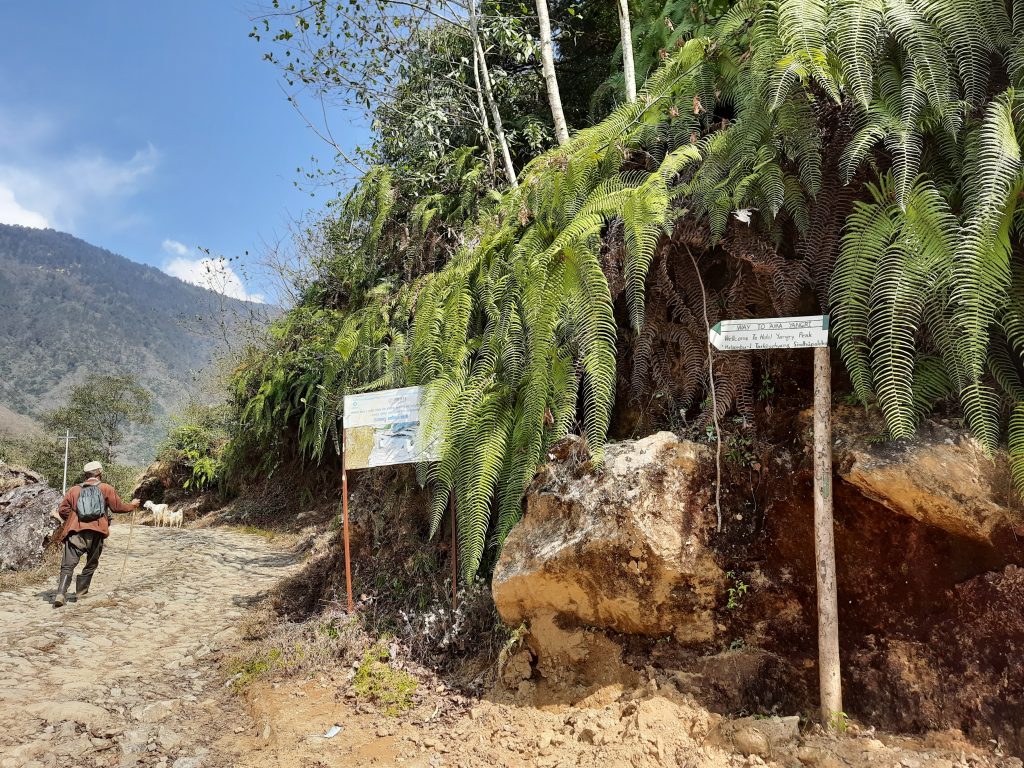
Trek Route: The bus route is from Narayantar to Tarkeghyang through Melamchi and Timbu. The trek route is from Tarkeghyang to Aama Yangri Peak.
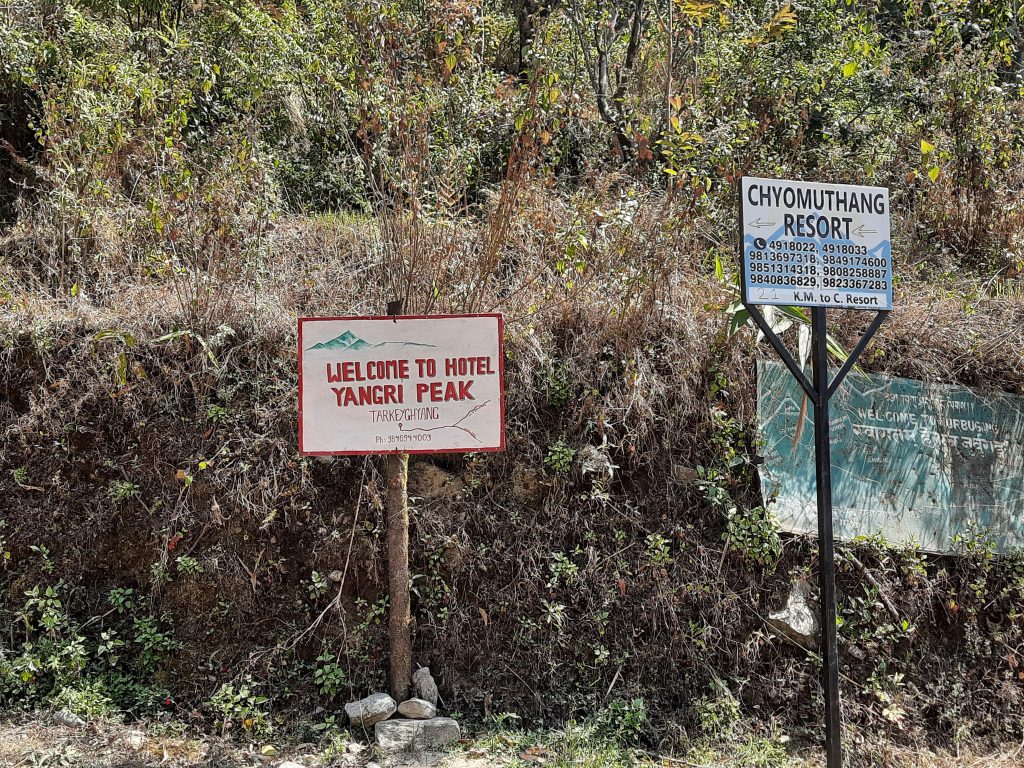
Hotel Information in Tarkeghyang: Hotel Yangri Peak, 9848944003
Things To Carry:
Raincoat
Trekking
poles
Extra
pair of clothes and socks
Flip-flops
Snacks
Medicines
Things To Wear:
Trekking
shoes
Light
and loose clothes (jeans not recommended)
Sun
hat
Sunscreen
Itinerary
Day 1: Take a bus from Narayantar
and reach Tarkeghyang on the first day.
Day 2: Trek to Aama Yangri Peak and
back to Tarkeghyang and to Kathmandu or extend the trip to day 3.
Specialty of the Trek!
You can finish this trek over a weekend! All you
need is two days from Kathmandu and the trek is over.
This is the easiest trek I ever had.
It is a safe trek for solo travelers too as you
can return back to the village within half day.
You get nice hospitality in Tarkeghyang. The
place has been badly affected by 2015 Earthquake but it is getting better.
It is a virgin trail.
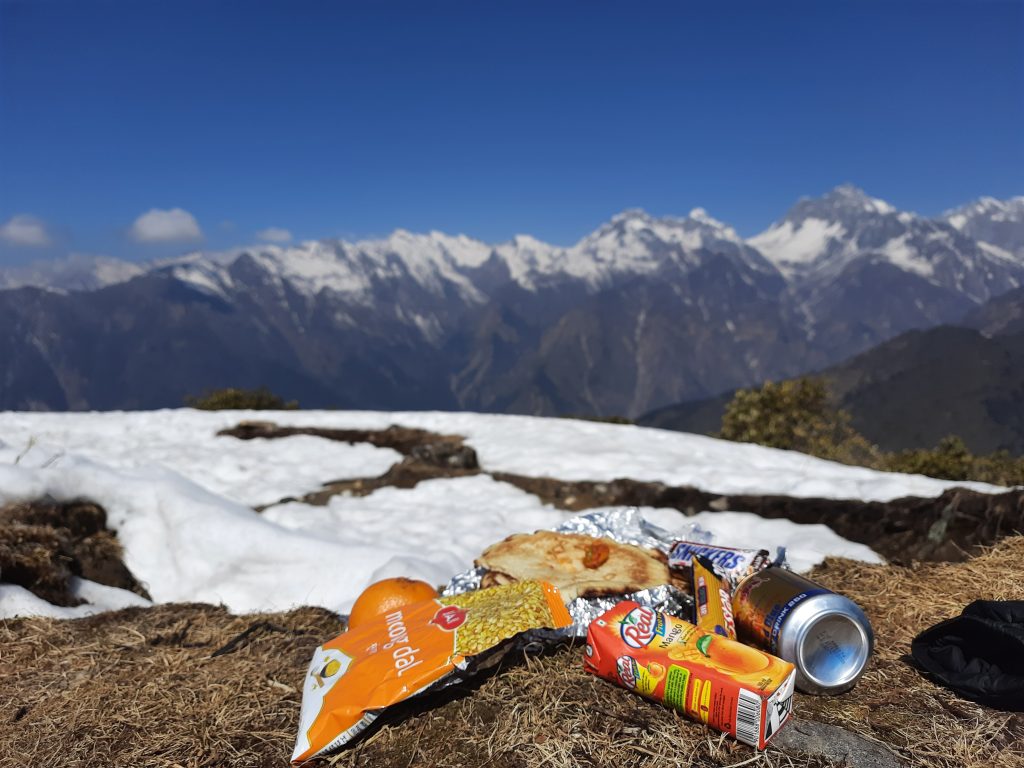
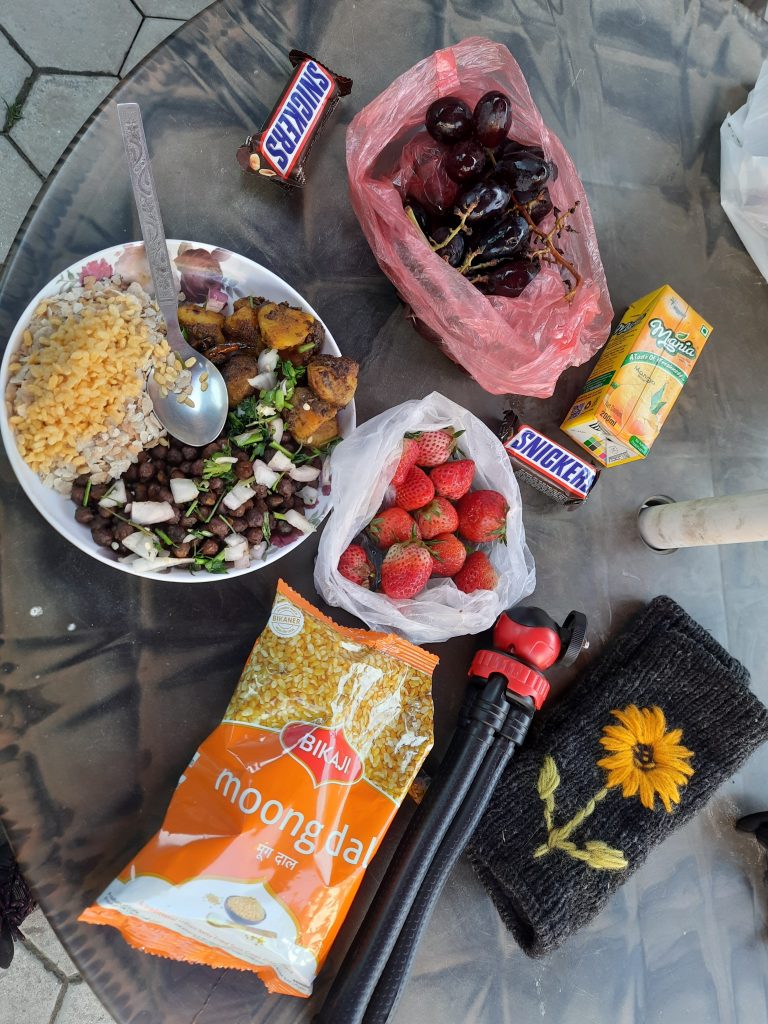
There is no chance you get to buy a coke or
snicker after you begin trekking from Tarkeghyang. So, carry whatever you might
crave during the trek. Well, carry your wrappers back with you!
Local Tongba, Tibetan breakfast, Nepali tato
khana, amazing Mountain View, nice weather, and amazing breeze!
My Trekking Experience
So, on March 12, 2022, I chose to
travel Aama Yangri. It was a last-minute idea when the trekking expedition to
Tilicho was postponed owing to severe snowfall blocking the path. So, I started
my journey with very little research. I couldn’t find a bus that would take me
directly to Tarkeghyang since it was an alternative day for the bus. As a
result, I took the bus up to Timbu. It was a nice walk from Timbu to
Tarkeghyang.
I left Kathmandu at 8:00 a.m., and
between 1:00 p.m. and 2:00 p.m., I had arrived at Tarkeghyang, the last
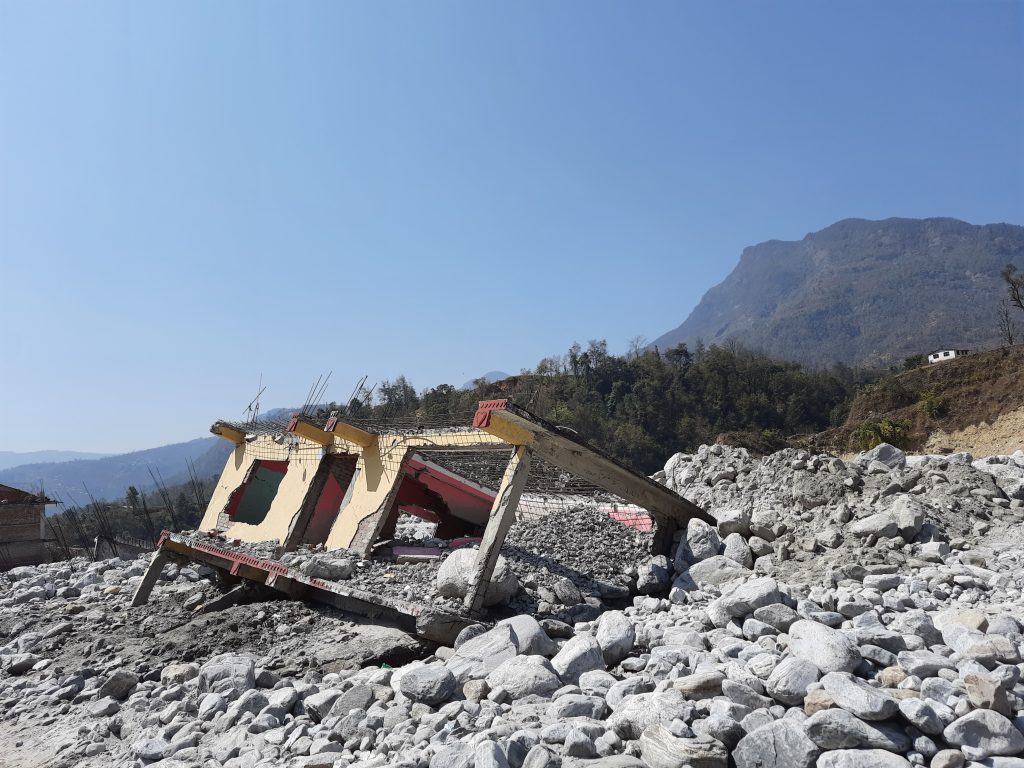
stop of the day. Melamchi’s path provided a terrifying perspective. The
remnants of structures that were devastated by a recent flood were found along
the Melamchi riverbank. Aside from that, the path offered spectacular views of the
mountains and greenery. It was mostly off-road.
Tarkeghyang was stunning. I stayed
at Hotel Yangri Peak, which provided excellent service. The nicest aspect about
this walk is that you arrive at the accommodation well before dark, allowing
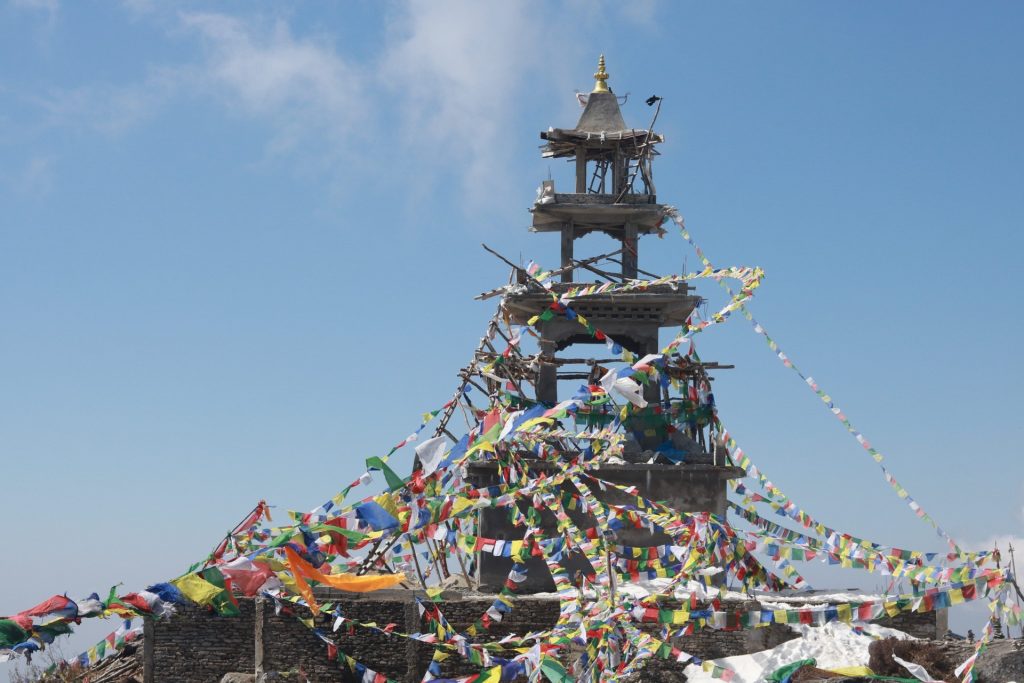
you to see the area on the same day. Near where I stayed, there was a gumba.
The colorful ribbons linked to the gumba let in a beautiful wind from beyond
the mountains.
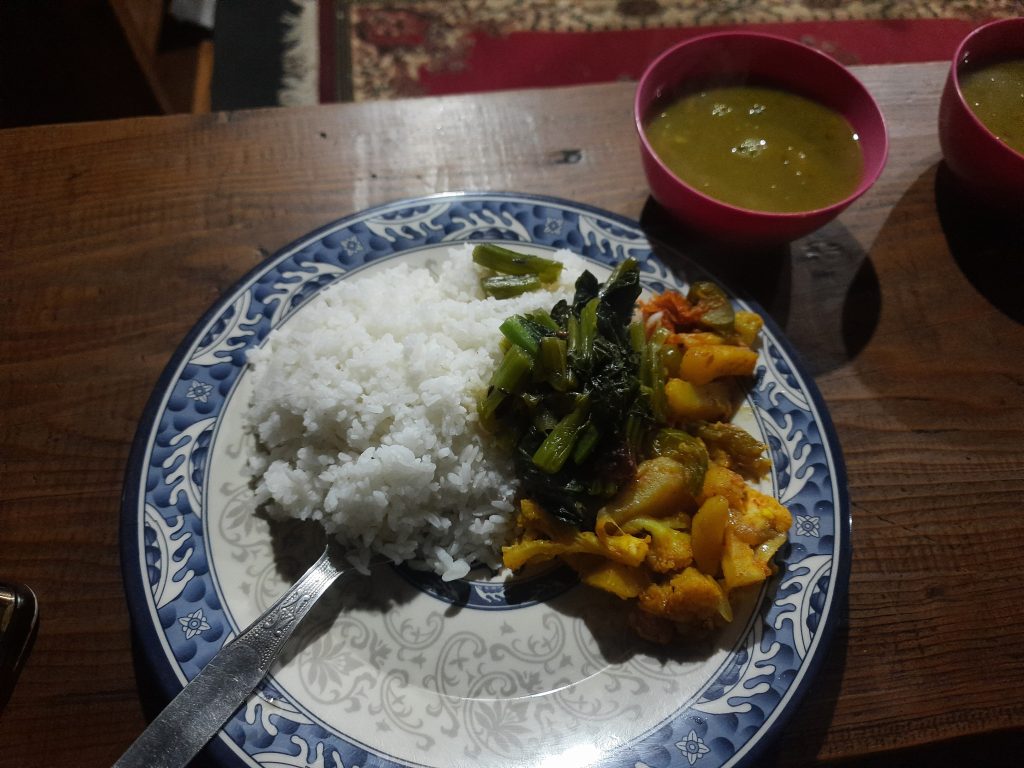
I ate a delicious meal and drank
some powerful tongba. The hot shower was the finest feature of the accommodation!
With a room fee of NPR 1000, the facility was rather inexpensive. Before
supper, I had the finest Rara noodles soup with Rayo ko Saag.
The next day, I awoke at 5:00 a.m.,
ate a delicious breakfast (honey and peanut butter pancakes with tea), and
began hiking at 6:00 a.m. There are two options available. You may ride your
bike up to Jhumothang and then start walking from there. Trekkers coming from
Tarkeghyang might use a different track that has a lot of steps. STAIRS,
STAIRS, STAIRS!
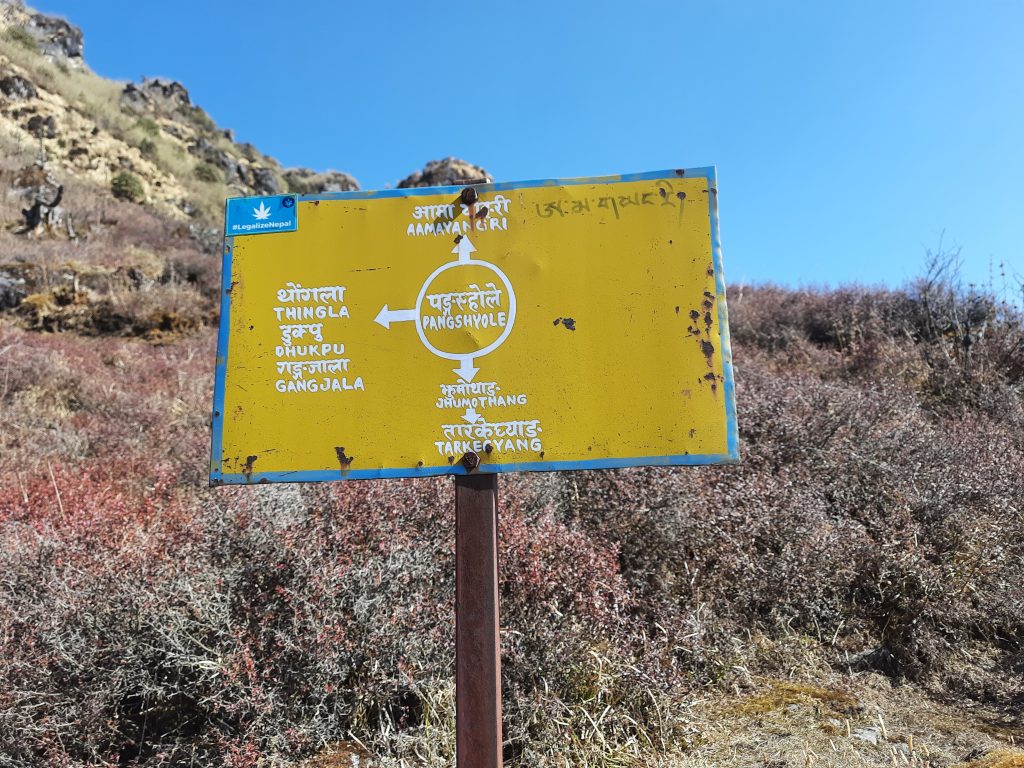
Pangshyole is the next destination
after Jhumothang. It will take you two hours to get there. It features a little
resting area with a spectacular view. The trail was not difficult for me.
However, it might be challenging for first-time hikers.
Within one to two hours of leaving
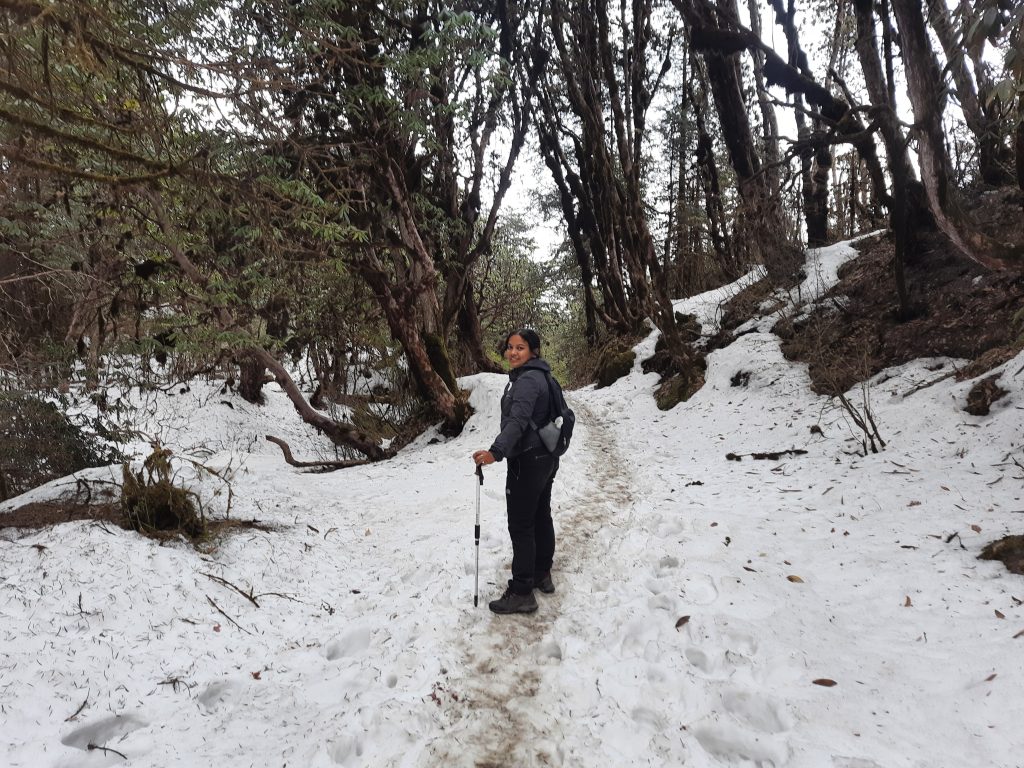
Pangshyole, I arrived at Aama Yangri Peak. The path was covered in snow. It was
also really chilly. A gumba can be found at the end of the trip (which was
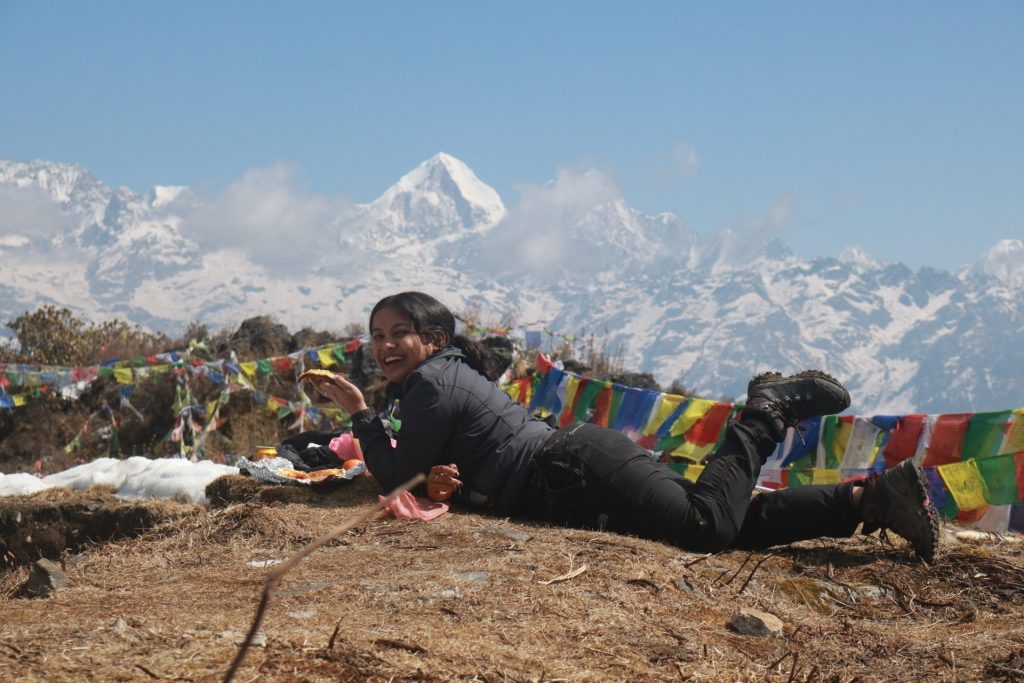
under construction). The view from the location was magnificent. I
had brought some leftover pancakes and other munchies, which I ate and
carried the wrappers back to Tarkeghyang. I arrived in Kathmandu on
the same day. So, it was only a two-day hike for me.
The thing I forgot to talk about is
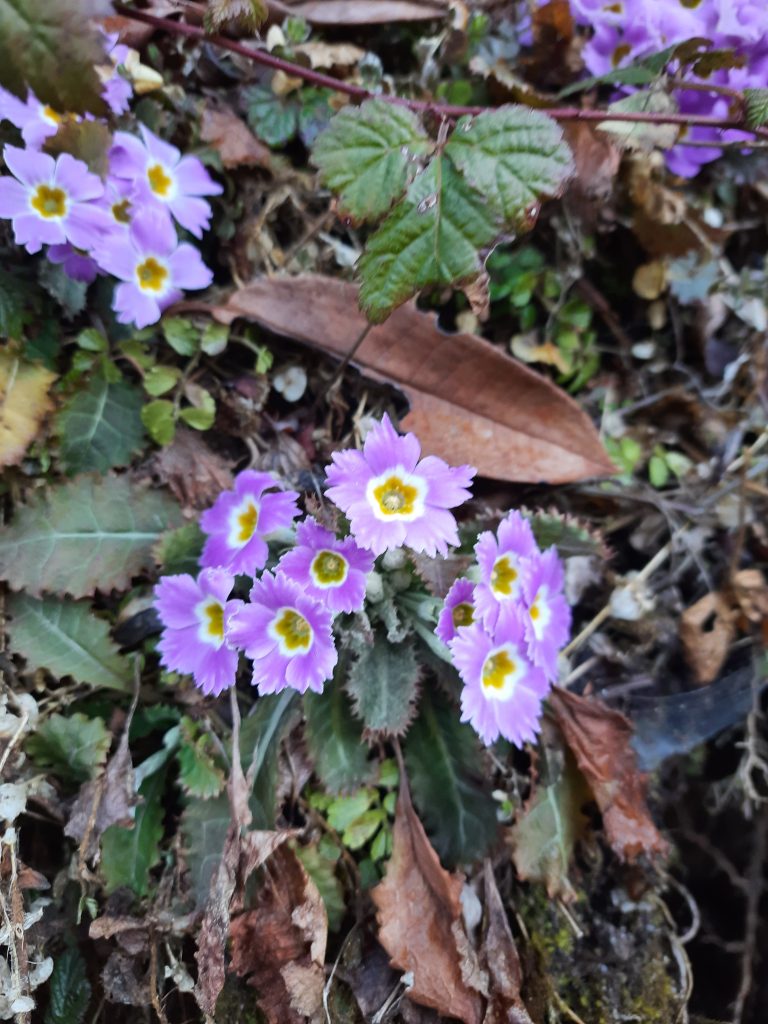
the wildflowers along the trail. The purple wildflowers were covering the hills
so beautifully. And it also had rhododendron trees, but unfortunately, not most
of the trees were blooming rhododendrons.
If you reside in or near the
Kathmandu Valley, you should go on this tour. It has a lot to give. The
pathways are empty and ready for your footsteps. Just a small request: please
do not litter the trail. On the journey, there was a lot of garbage created by
humans.
Furthermore, if you are staying in
Tarkeghyang, speak with local residents. You might hear unexpected stories
about how their lifestyles changed after the earthquake. You’ll also appreciate
learning about their distinct cultures.
I made my 11-day trip to Shey
Phoksundo Lake in October 2021. It was via roadways and the trip included 5
days of trekking. It was my second time visiting Karnali Pradesh. My last trip
was to Rara Lake. And, though both the lakes lie in neighboring districts,
there were a lot of differences.
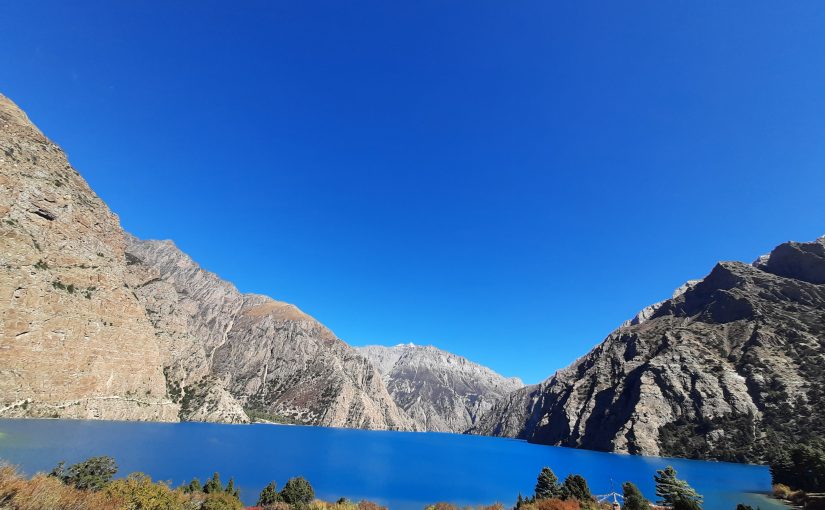
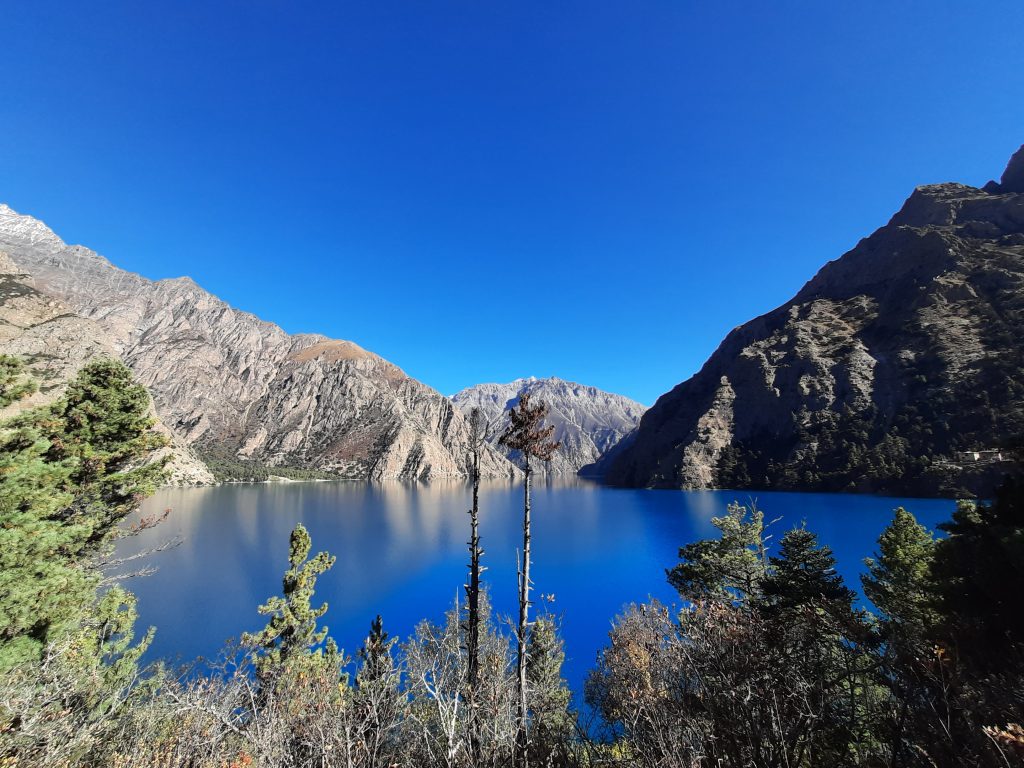
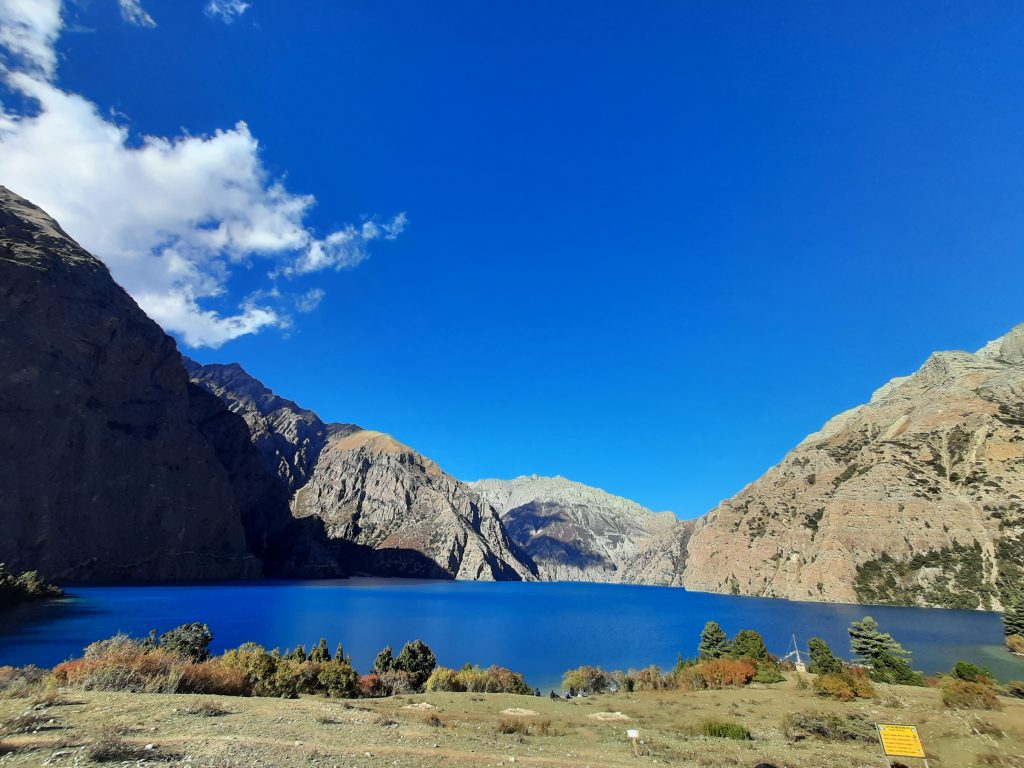
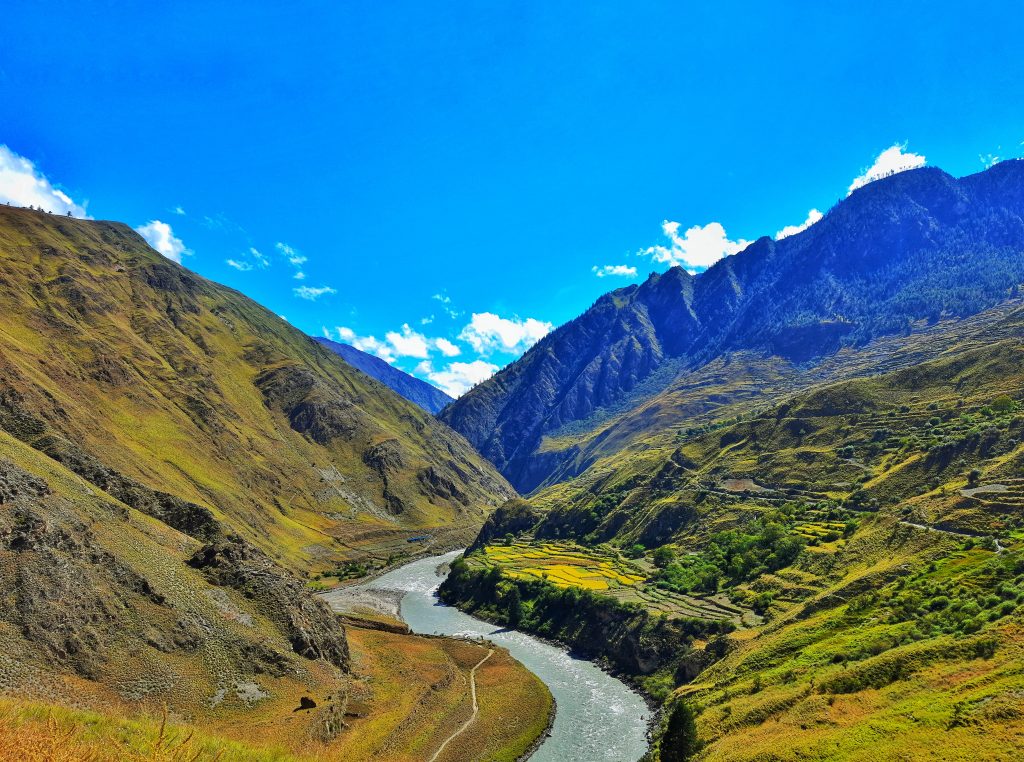
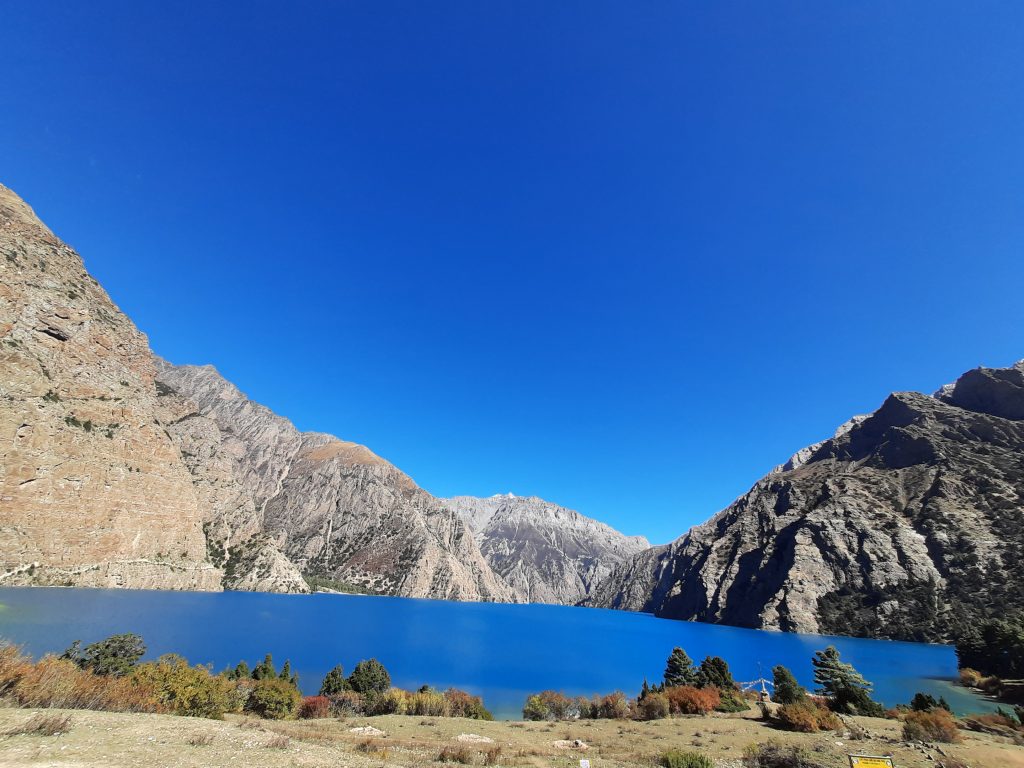
If you do not have enough days off, you can take two flights, one from Kathmandu to Nepalgunj and the other from Nepalgunj to Juphal, Dolpa. It will lessen your days and make the trip less stressful. The trail is along the Bheri River at first and along the Phoksundo River later up to the lake. The lake is a dark blue-colored beauty that is so huge that it is impossible to circle it.
Beautiful Lake Phoksundo
Information about
Shey Phoksundo National Park:
District: Dolpa
Coordinates: 29º10’24″N 82º56’12″E
Traditional Name: Yungdrung Lhatso
Region: Shey Phoksundo National Park, 3,555 sq. km
Elevation: 3611.5 m
Lake: Glacially dammed, oligotrophic
Maximum depth: 145m
Covered area: 4.94 km2
Maximum length: 5.15 km
Area of National Park: 355,500 ha
Cultural Myth of Lake’s Origin: Guru Rinpoche chased after a demoness in Dolpo. She asked the villagers for help to hide her traces but defrauded them. Thus, the people told Guru Rinpoche about her, whereafter she got angry and flooded the houses with the blue water.
Specialty: a largest national park in Nepal, highest snow leopard density, best quality cordyceps in the world, Ramsar site Phoksundo Lake, famous Shey and Shamling Gumba, cultural dress rental option (Sherpa dress)
View from the trail
Natural Values:
The exceptional variety of flora and fauna: blue sheep, musk deer, birds, endemic butterflies, snow leopard, and more.
The institution of the National Park and the WWF protect the elusive and endangered population of snow leopards by implementing various projects.
Birch, juniper, oak, cypress, cedar, pine, shrubs, flowers, and more.
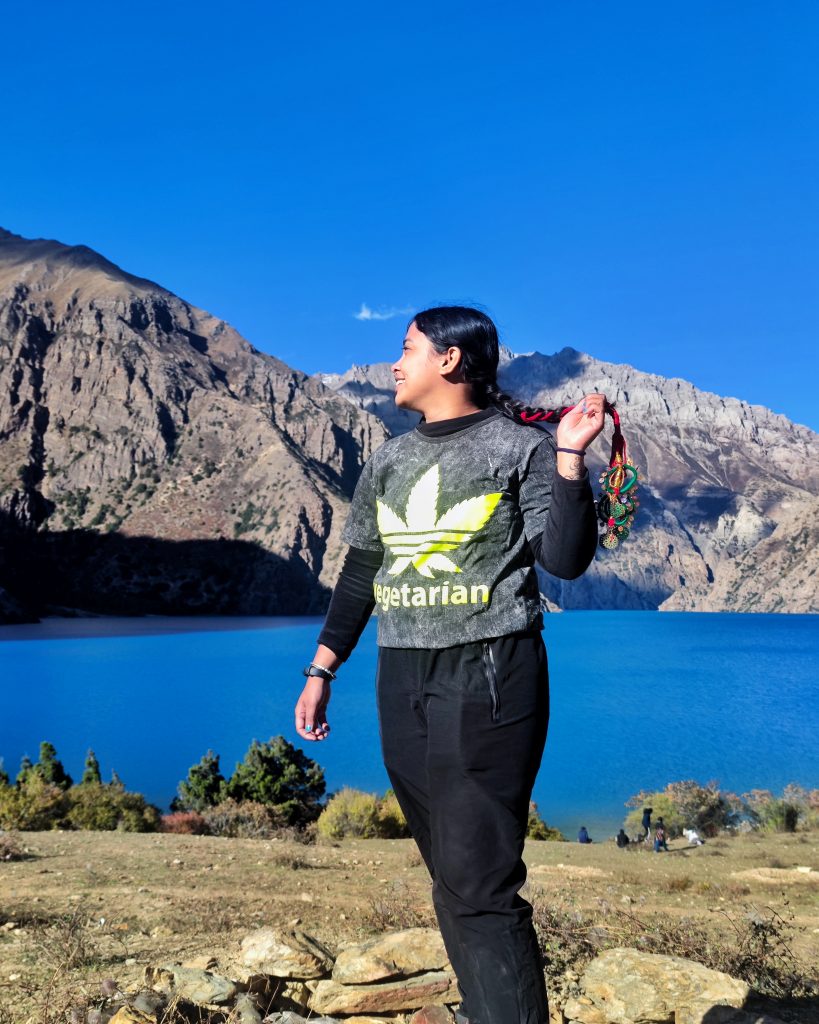
In front of Lake Phoksundo
Itinerary:
Day 1: If you have your vehicle like a jeep or bike, starting at 6:00 pm, you can reach Surkhet by 8:00 am or 9:00 am. I recommend you make a night trip. Your first night will be in the vehicle.
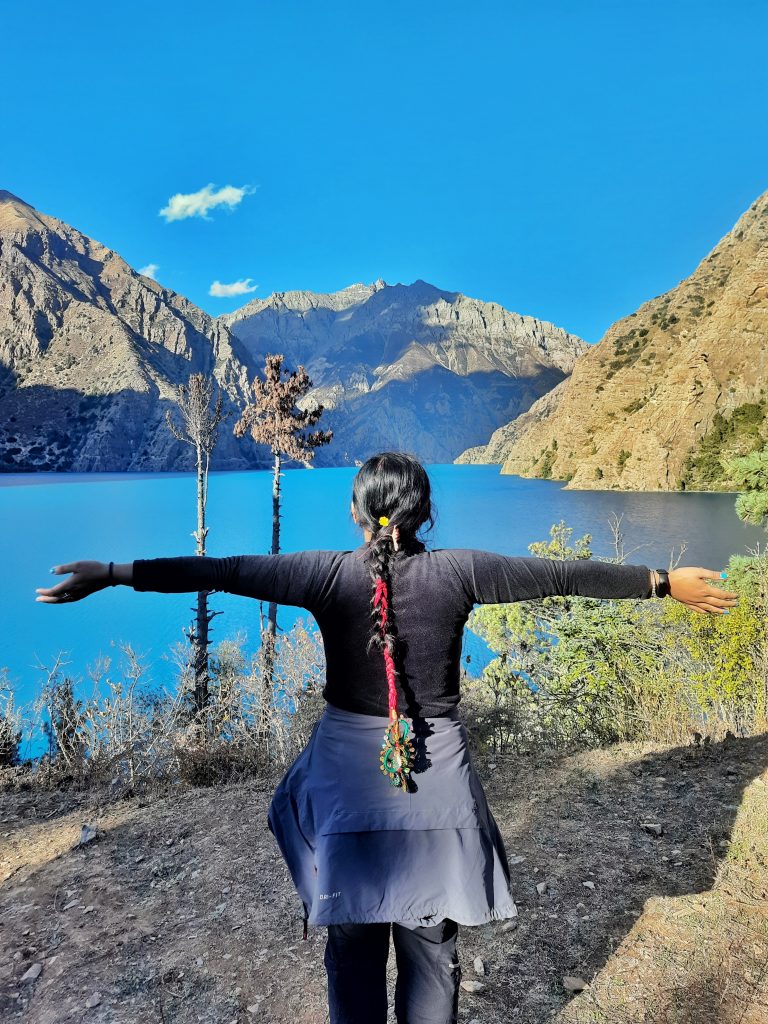
In front of Lake Shey Phoksundo
Day 2: Your first destination is Chhinchu, Surkhet. You will find several buses and jeeps that will take you to your second destination, which is Radi Bajar. If you take a public bus from Chhinchu at 11:00 am as we did, you will reach Radi Bajar, West Rukum by 9:00 or 10:00 pm. We stayed at Sishne Cafe and Restaurant at Radi Bajar. The hotel is a newly opened one and you will find the best service here with a very friendly management team.
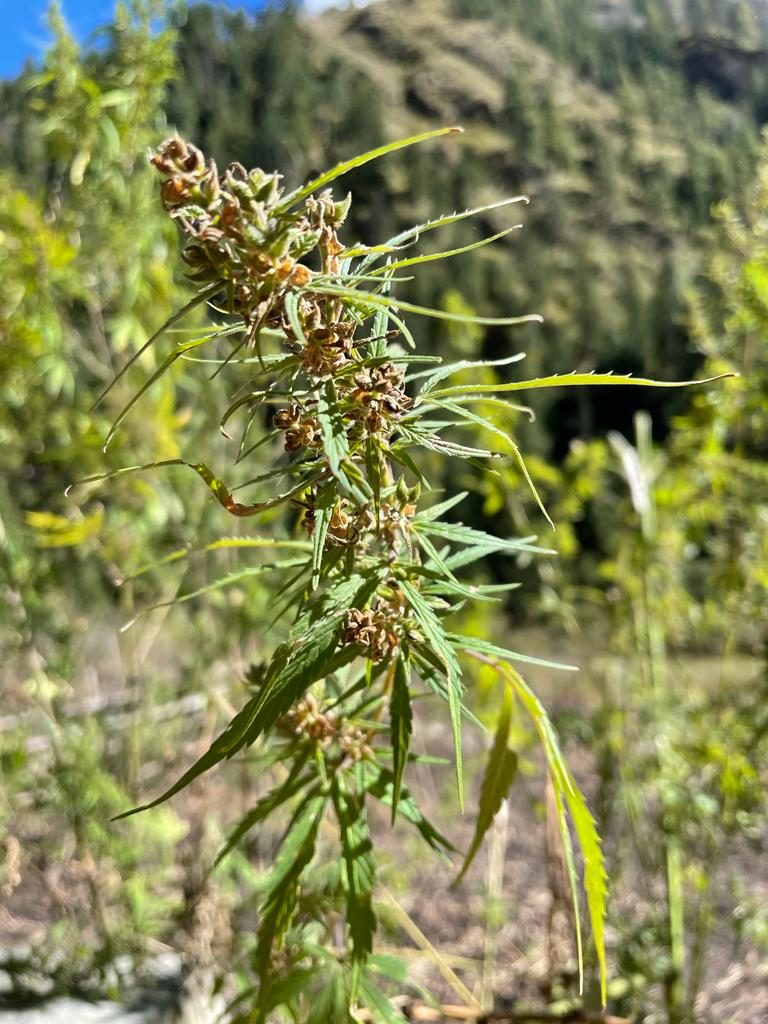
Cannabis Plant
Day 3: Begin day 3 as early as possible. You will find a
jeep that will take you to your next destination, which is Khadang. If the
volume of the river is high, you will need to take two to three different jeeps
to reach Khadang. We stayed at Sugam Hotel the third night at Khadang. The
hotel was average, with enough beddings for 11 people (our team). The condition
of was the toilet was bad. But well, the hospitality of the hotel owner was
great and the food was tasty too.
Radi Bajar to Chaukha (NPR 500) Chaukha to Tallubagar (NPR 150) Tallubagar to Damachaur (Walking) Damachaur to Karabgad (NPR 1000) Karabgad to Khadang (Walking)
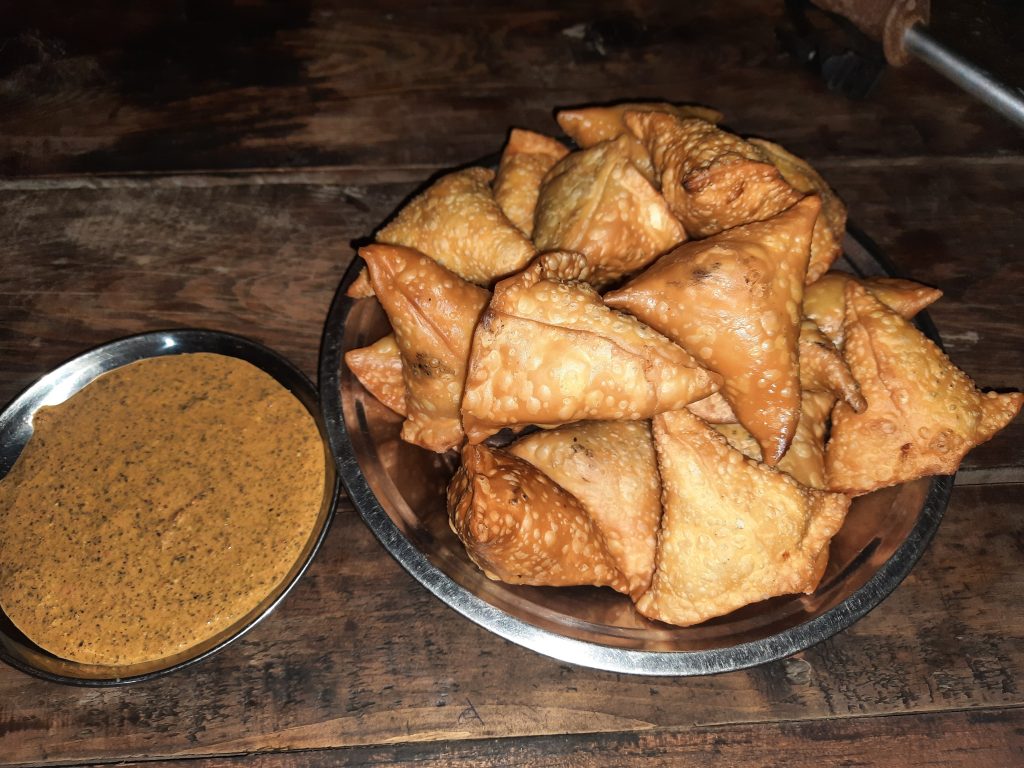
Surprisingly found Terai food – Samosa
Day 4: It is recommended to start early on day 4 as well.
We reserved a jeep at 8:30 in the morning from Khadang and reached
Tripurasundari with NPR 500 per head. Before heading from Khadang, we had
samosas for breakfast at Khadang which was NPR 25/per piece. We found a woman
selling apples at NPR 10/per apple. It was delicious. From there, we reserved
another jeep that took us to Suligad which is the actual starting point of the
trek. From here, you do not get any transportation facilities besides horses or
mules. You enter the Shey Phoksundo National Park after crossing a bridge. We
had our lunch at Suligad. After trekking for a few hours, we reached Syagdey
which became our destination for day 4. There’s only one hotel in Sydney, so if
you do not have a pre-booking, you can stay at Suligad too.
Day 5: On day 5, we started our trek after having coffee
and roti for breakfast and reached Chhepka for another cup of tea. From
Chhepka, after trekking for a few hours, we reached Ryachi at around 1:00 pm
where we had lunch. From Ryachi, after trekking for a few hours, we made it to
Syajol. In Syajol, we stayed at Trekker’s Inn. The hospitality here was great
too and the food was yummy as well.
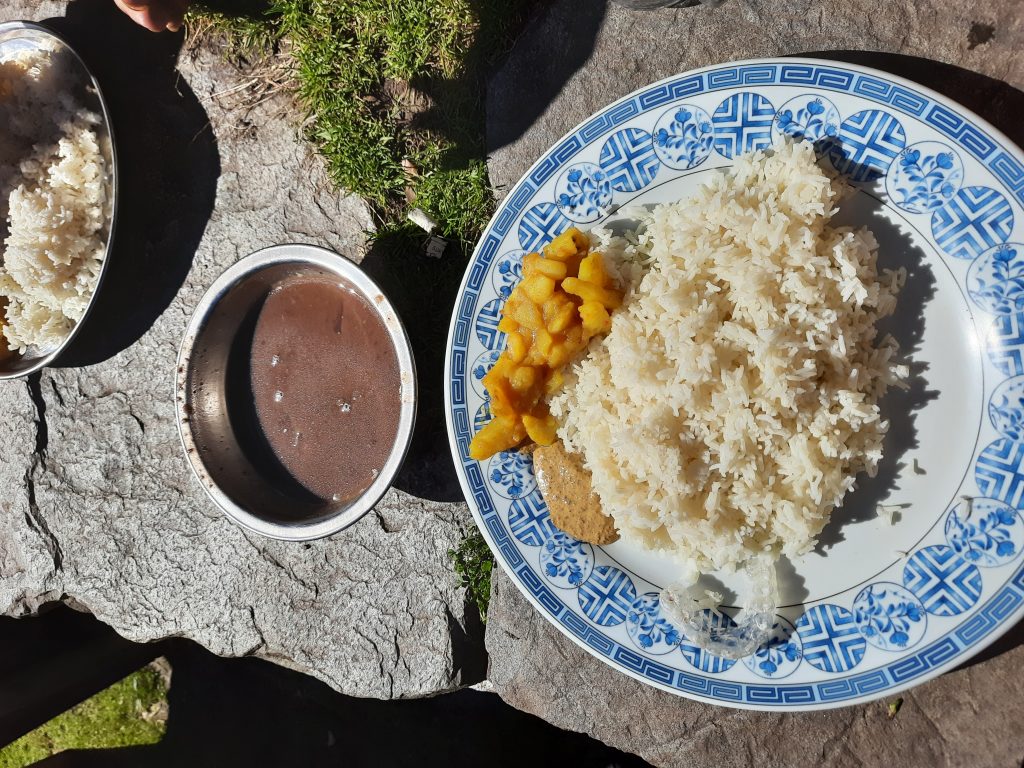
Yummy lunch at Ryachi
Day 6: On day 6, we started
trekking early in the morning as usual. It was the most important day of our
journey as we were about to reach Shey Phoksundo Lake after almost 3.5 hours of
trek. The slope increases from this point and the trek becomes extreme after
1.5 hours. After reaching the lake, we stayed at Sherpa Hotel. The hospitality
and service were great. Food was quite expensive because of the struggle to
carry grains upon the place.
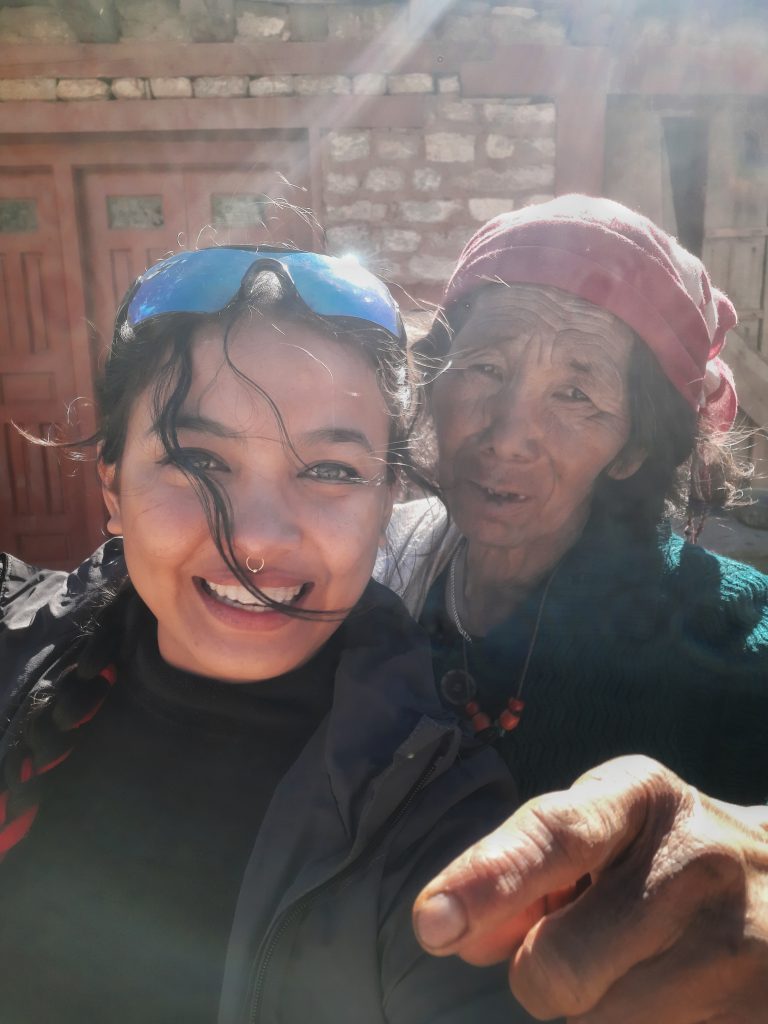
Selfie with Dolpali Grandmother
Day 7: You can hike to several places in and around the
lake like Shey Gumba, different viewpoints, etc. We decided to leave the place
after lunch and left at noon. On the seventh day, we made it to Ryachi where we
had had our lunch on day 5. We stayed at Pahuna Hotel.
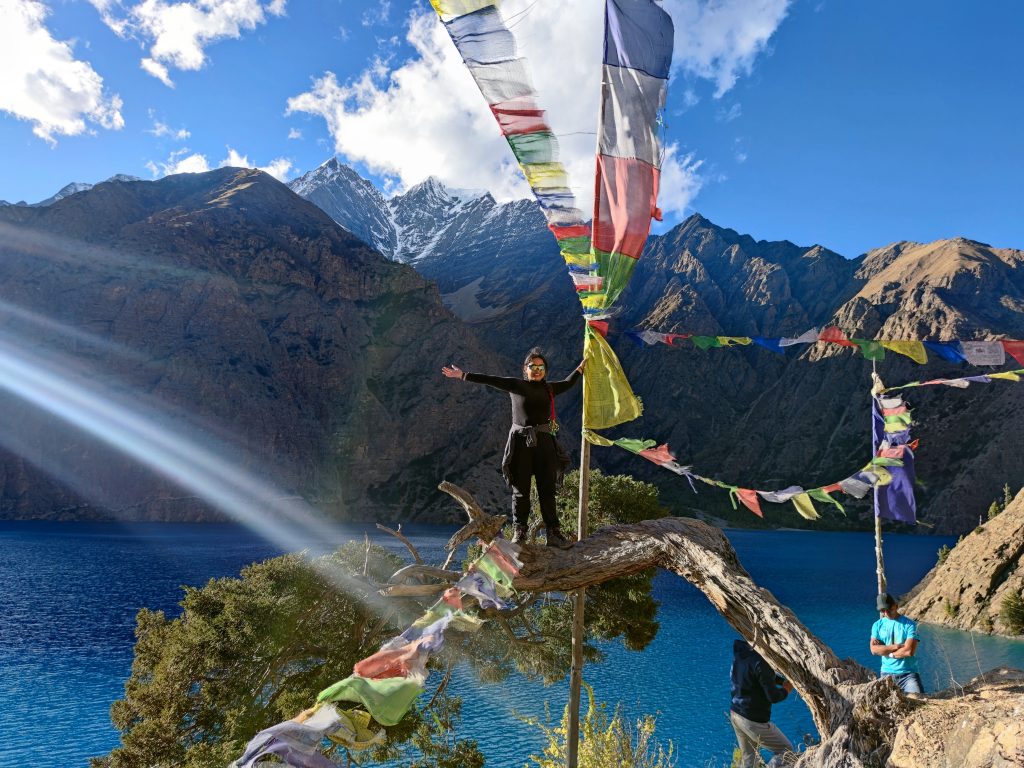
Trending photoshoot point near Gumba
Day 8: On the 8th day of the trip, we reached Tripurakot.
Due to an accident of one of the jeeps before us near Suligad, we were unable
to move forward from Tripurakot. We stayed at Shey Phoksundo Hotel where the
room and toilet were not very good but the food was tasty and the hospitality
was great.
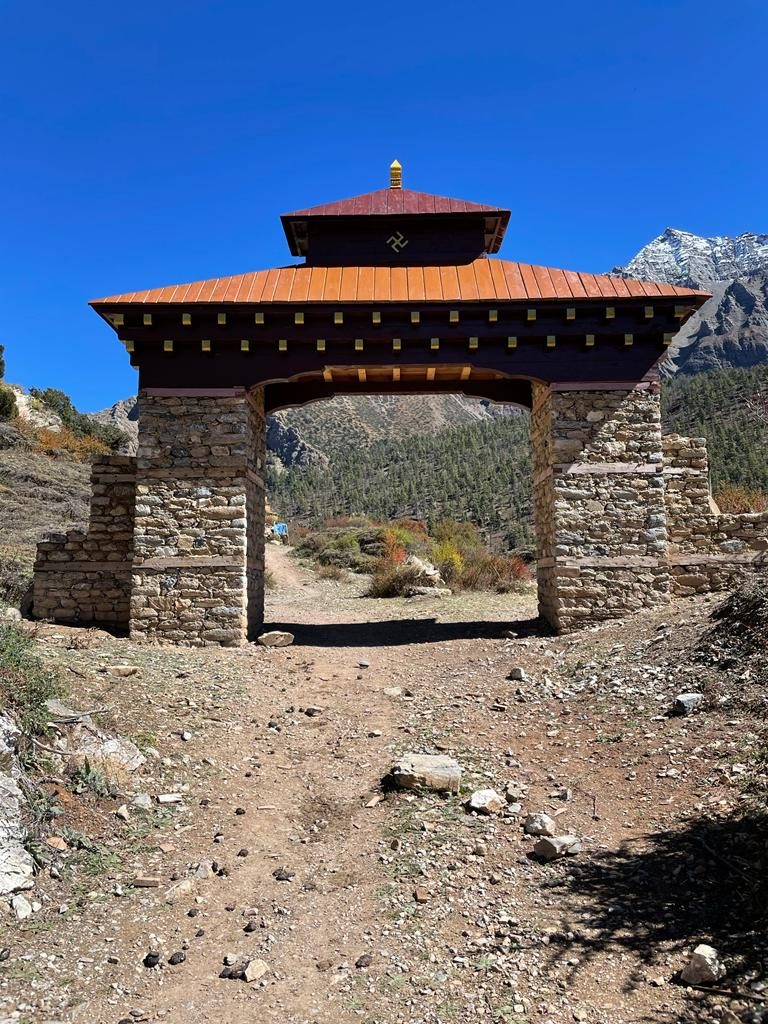
Entrance Gate of Phoksundo Lake
Day 9: On day 9, we made it to Radi Bajar at 10:00 pm. The
time can vary depending upon how long you have to wait for the jeep and of
course the speed of your trek. We stayed in the same hotel that we stayed on
our second night.
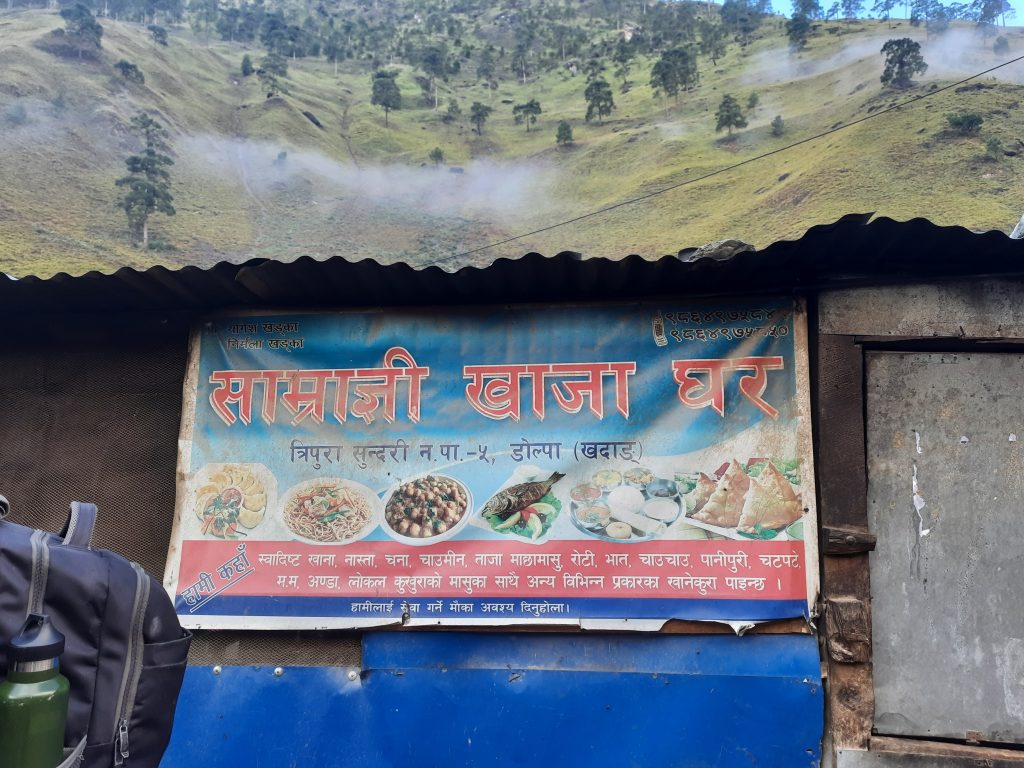
Tripurakot Hotel
Day 10: On day 10, we reserved a jeep to Khalanga. There we had the amazing Thakali Lunch at Thakali Hotel. From there, we left for Kohalpur in another reserved minibus. We reached Kohalpur at around 4:30 pm. Finally, we took the last bus to our hometown and reached home on the 11th day! The trip ended on the 11th day.
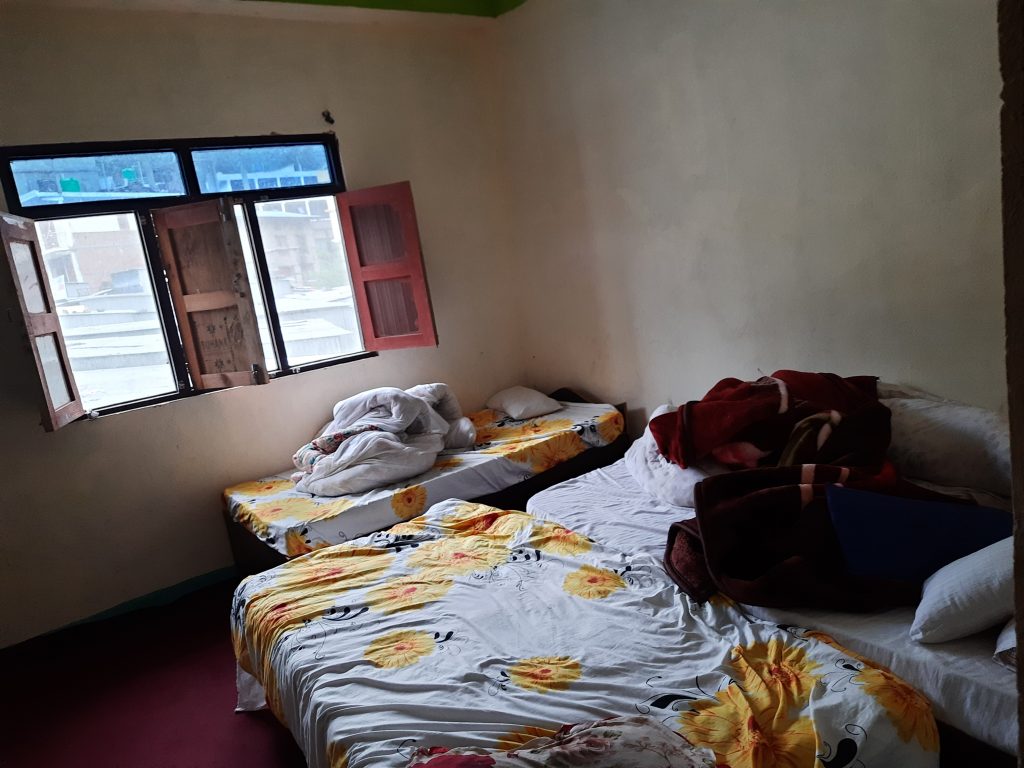
Lodge at Radi Bajar
Budget Plan
For my 11 days trip to Shey Phoksundo, I had estimated a budget of NPR 30,000. With the amount, my trip was successful. As we had to reserve a jeep in several places, our transportation cost was high. I have listed below the tentative prices that might be useful for the trip:
1. Veg Lunch (Daal Bhaat): – NPR 270 to NPR 400 (the price increases with the increase in altitude of the place) 2. Extra Meat (Chicken/Mutton/Fish/Yak): – NPR 200 to NPR 400 3. Chhinchu, Surkhet to Radibajar Bus: – NPR 1500 4. Radi Bajar to Chaukha Jeep: – NPR 500 5. Chaukha to Tallubagar: – NPR 150 6. Damachaur to Karagbad Jeep: – NPR 1000 7. Khadang to Tripurasundari Jeep: – NPR 500 8. Room: – NPR 500 to NPR 1000 (for multiple people beddings available in a single room) 9. Apple: – NPR 10/pc
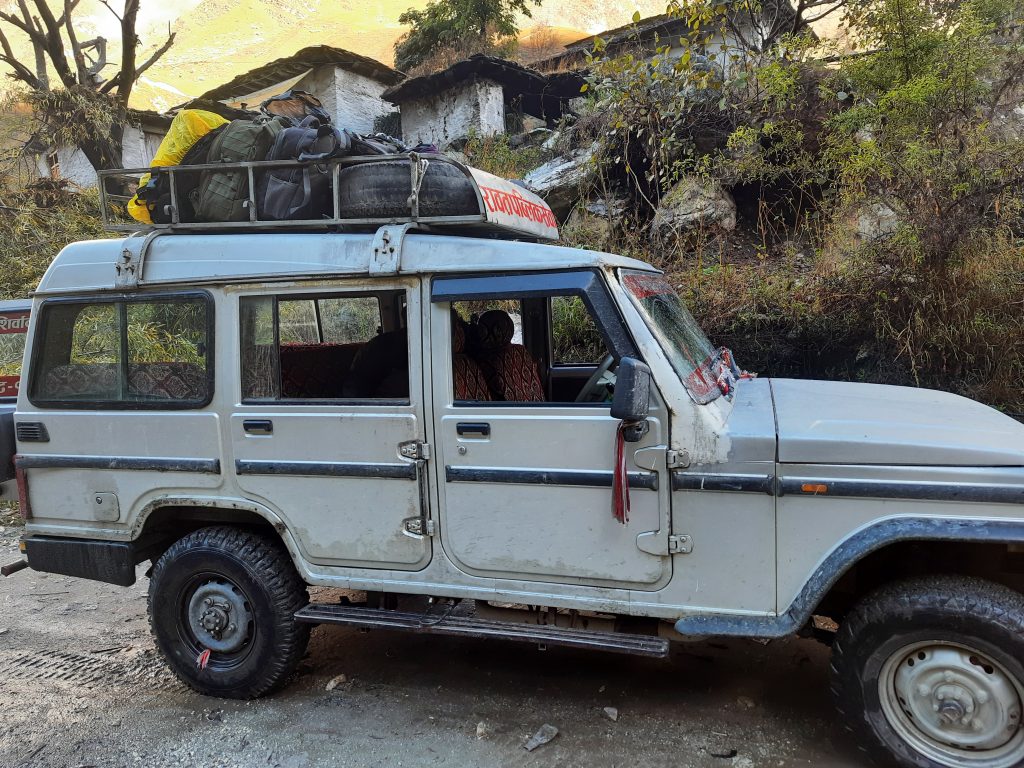
Jeep for transportation
Things to remember/consider:
Do not carry unnecessary items like a tent, sleeping bag, bulky clothes, etc. if you are traveling between September and November because the weather is fine and there are enough tea shops and hotels on the trail.
Prepare yourself for light rain, scorching sun, cold breeze, and a lot of bridges.
Snacks are expensive in the height. For example, a small 250 ml bottle cost us NPR 380 at the lake. So, it is recommended to carry enough snacks and an energy bar for your trek, and do not plan to buy it there unless you are okay with paying a huge amount.
Carry first-aid and medicines as you might not find any health facilities once you are on the hills and away from the headquarter.
Carry a power bank for your gadgets as most places in the Dolpa region have no electricity supply (while some places have solar electricity supply). Wi-Fi is only available around the lake region throughout the trail and even SIM networks are not available at most places.
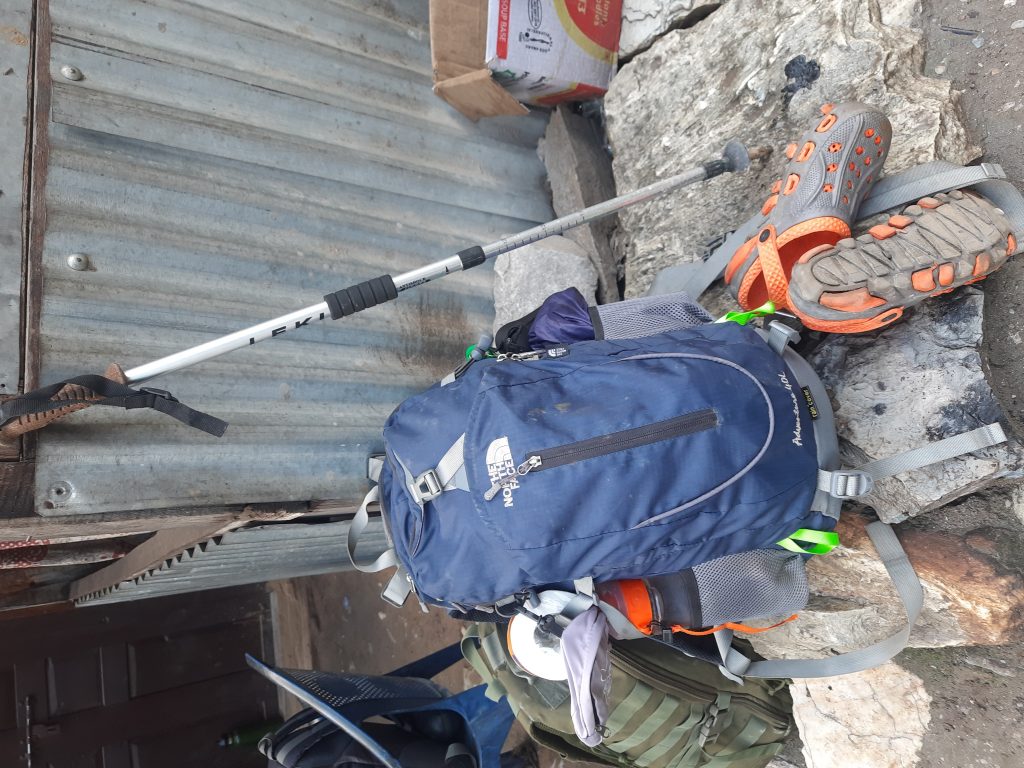
Trekking Gears that I used for my Trek
Exploration Points
Village and People:
Take
a walk through the village, greet the inhabitants with a smiling
“Namaste” or the Tibetan “Tashi Delek,” and get in contact
with the people. Find out more about the traditional lifestyle, handicrafts, as
well as local food and drinks. Find traces of the past and see the development
happening, such as the new village monastery. Maybe you want to get involved by
supporting the people’s culture in Tsho.
Chorten and Caves:
Tibetan: Chorten and Sanskrit: Stupa The stone monuments were erected at the occasion of a person’s passing, mostly for monks and masters of meditation. Now, they are to remember the impermanence and perviousness of human life. The biggest chorten in the center of the village is called Kalsang Woebar and was erected by Trenton Namkha Gyaltsen who built it as one of a series of four in Dolpo. You can also find caves inside the rocks or ruins of old stone huts which served as retreat places. There, some men and women made impressing experiences of meditation. They lived an ascetic life focused on discovering the nature of the mind.
Pastures and Surroundings:
The
pastures, forests, and fields offer beautiful places to relax, plants to
discover, and animals to observe. Please do not disturb the animal’s habitat
and do not walk on the fields when crops are unharvested.
Beautiful Lake Phoksundo
If you want to know more in detail about Karnali Pradesh, specially Rara Lake, there’s another blog on my website: www.blog.aleenarayamajhi.com.np
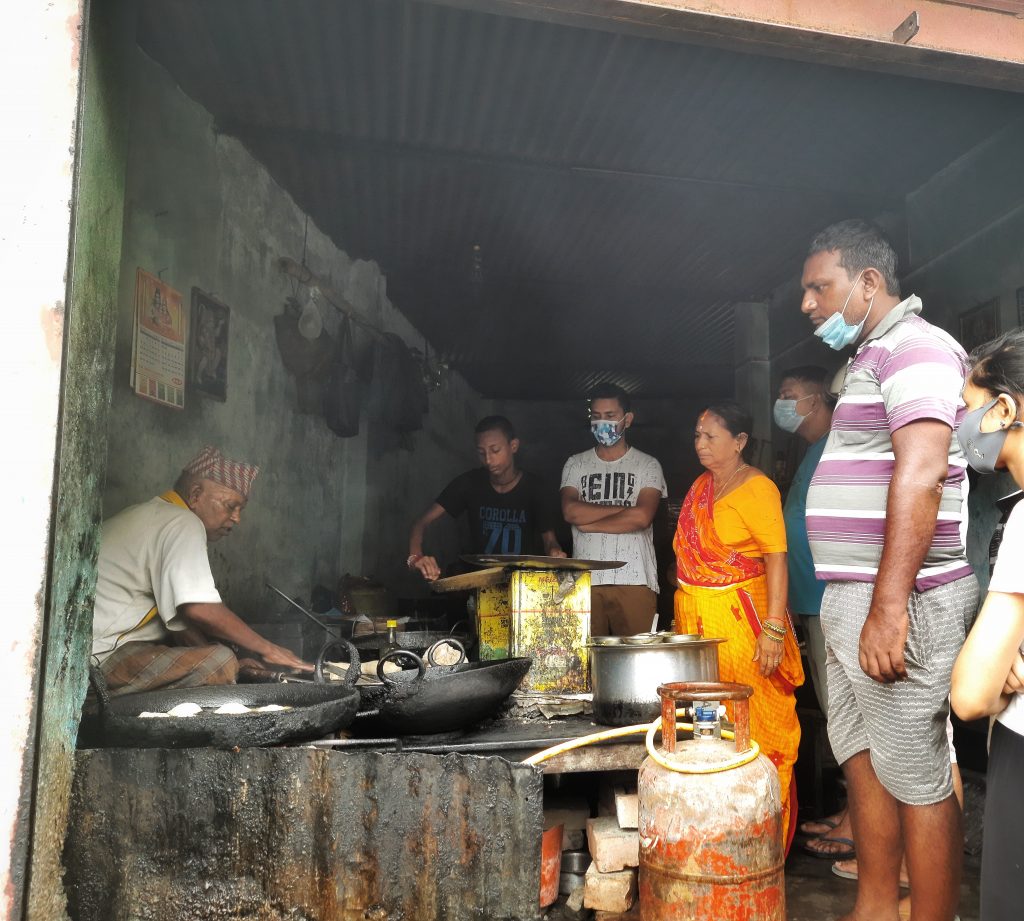
How many of you are from Biratnagar who has been to Baiju’s Jerry Puri Shop? If you haven’t been here yet, I recommend you to come here. Luckily, Baiju uncle’s jerry shop is near my house and I have been his regular customer from my childhood.
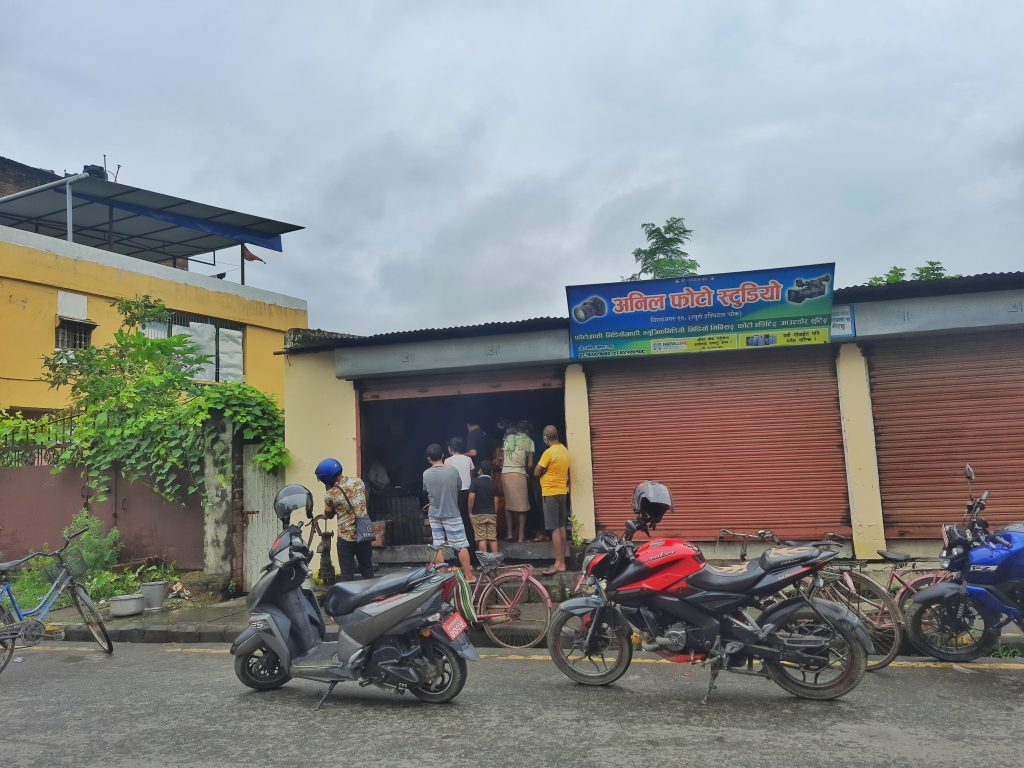
Baiju Shah, the owner of the shop, has been running his shop for more than 50 years. He runs the shop with his wife, son, and one assistant. The shop is next to Anil Photo Studio, near Neuro Chowk. Unfortunately, there is no board or name tag that indicates Baiju’s shop. But there’s just one jerry shop in the area, so you will not have much confusion!
Next to Anil Photo Studio
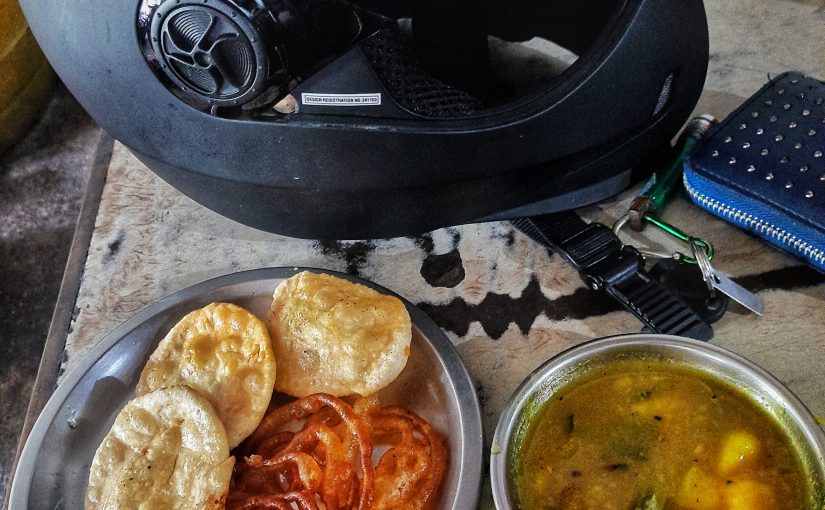
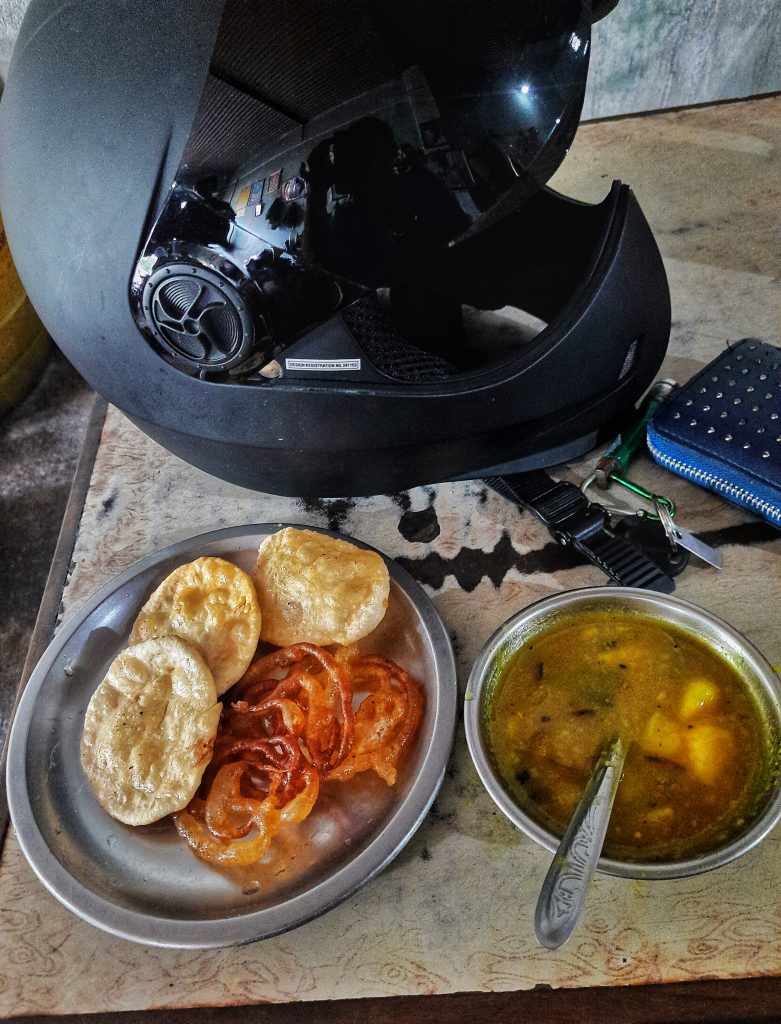
Well, it is not like any other ordinary sweet shop in Biratnagar. It has its own uniqueness. First of all, the size of jerry and puri are both tiny. The jerry or jalebi (deep-fried wheat flour batter soaked in sugar syrup) is full of sweetness and the puri (deep-fried bread made from unleavened whole-wheat flour) is a little thick but perfect for heavy breakfast. The combination of jerry-puri is incomplete without the sabji – the spicy potato curry which has consistent taste.
I like to eat Baiju’s jerry-puri as a sandwich by putting single jerry between two puris. Even the pricing here is done differently. You’ll have to pay for the number of puri and jerry you have eaten and it is not served in kilograms or grams. The price for one jerry or one puri is NPR 5 and the sabji comes for free!
If you are new to Biratnagar, and do not want to miss the major things to do here, add ‘breakfast at Baiju’s Jerry Shop’ in the list. You will find hot and tasty jerry-puri in the morning from around 6:00 and it will last for few hours. Make sure, if you are running late, you visit the shop on weekdays because on Saturdays, the shop is crowded by people from different places. If you are patient enough, and want to be the part of the crowd, you should visit the shop on Saturday! You can also eat your food elsewhere as there is the facility of takeaway too.
If you are a hygiene freak, who is super conscious of the cleaneliness, this local shop might not be an ideal place for you. But for the real foodies, who want to experience the classic taste of Biratnagar, Baiju’s shop is your must-visit-shop.
If you go on weekdays, when Baiju uncle is less busy, you can hear his stories about how he shifted his old shop that was just a hut into a new one, his Bombay stories, his experience on selling jerry-puri for more than 50 years, and how he has been attached to his business and how he has profitted in all these years. Baiju uncle is a fun-person who panicks a little when the crowd gets bigger, but at the end, he loves to serve his customers and makes sure everyone gets to eat his yumyy jerry-puri!
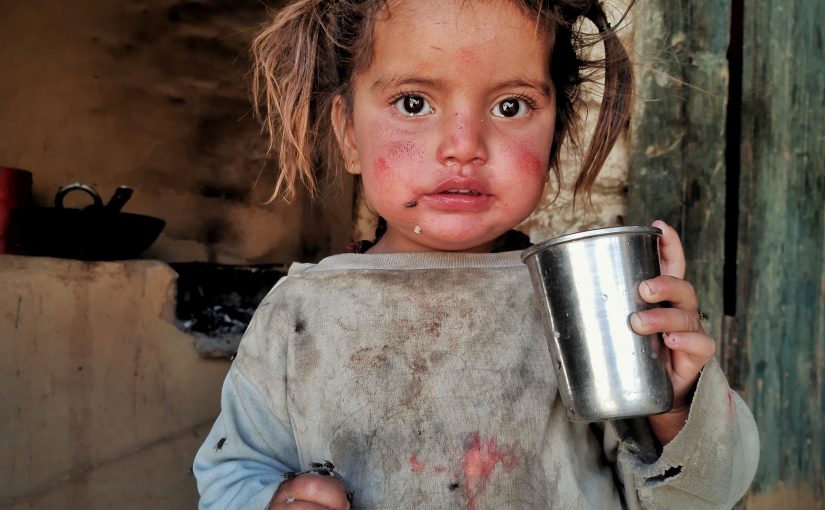
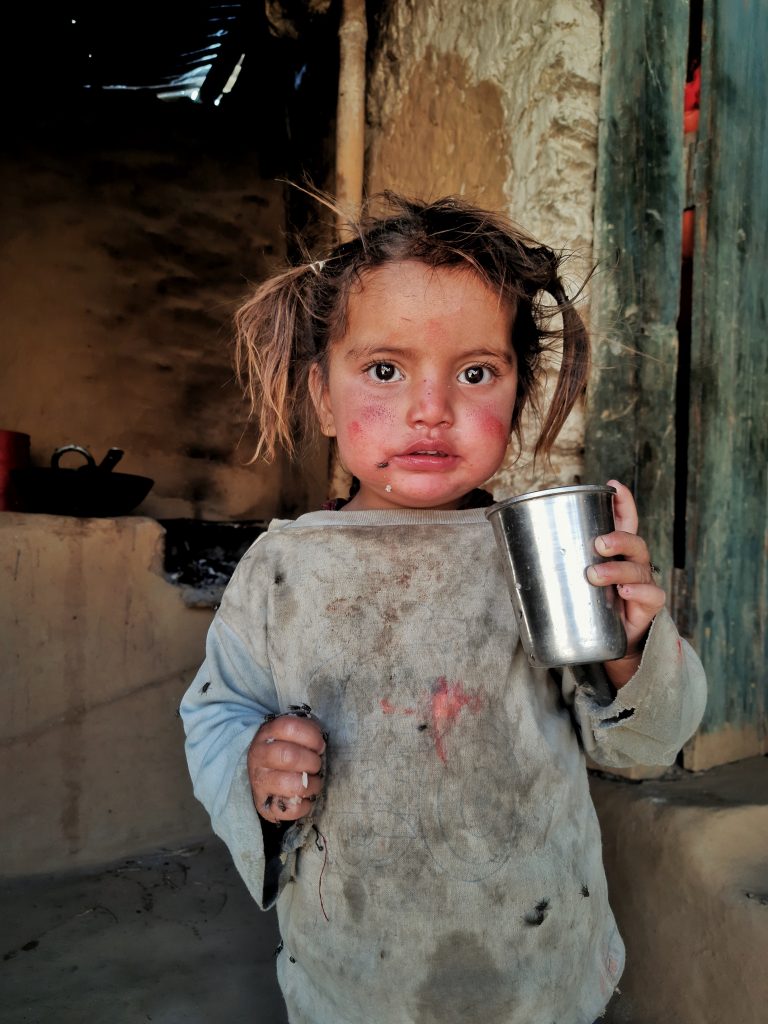
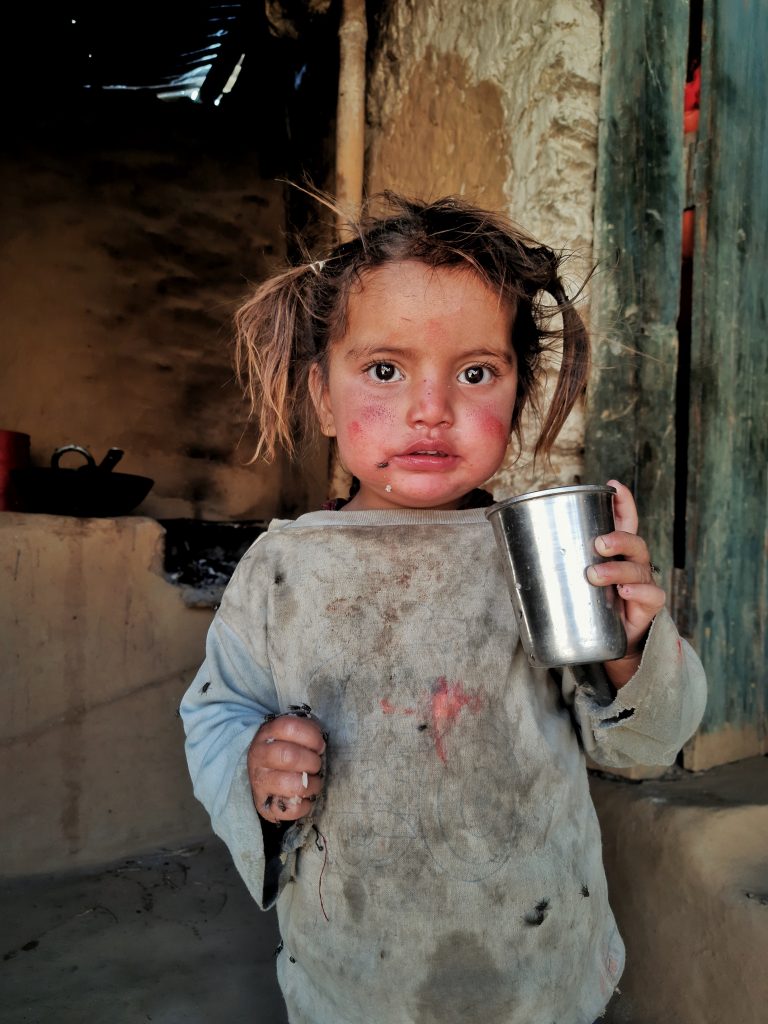
“???? ?? ?ℎ? ?ℎ??? ??? ?????”, said her father when I approached her for a picture. This little girl had just finished having lunch and was about to wash her hand when I took her picture. Living in a small house in Manma, Kalikot, the poor girl and her family do not have enough facilities. They lack regular electricity and clean and regular water supply.
The first thing I noticed was her charming face with rosy cheeks and pearly eyes. The second thing I noticed was her hands full of flies. During my one-day stay at Manma, I did not care if the place was dirty or not. But the minute after I met this little girl, I started noticing each child in the area. Not just children, even youths and adults lacked hygiene. This was their way of life.
There was no electricity and network in another village in Kalikot after traveling for a certain distance. The villagers kept cold drinks under the sand on the bank of the Karnali River to keep it cold. I was fascinated and then imagined a day in my life without electricity, it surely got dark.
Things got worse after I made further travel to the mountain region of Karnali Province. Reaching Mugu was a huge disappointment in terms of cleanliness. I stayed in a homestay around 10 km away from Rara Lake inside Rara National Park. Being such a touristic place, I had imagined having at least some basic facilities like clean water and room. I do not want to sound rude, but people did not bother to clean themselves or wear clean clothes. Those who cooked food for us, and the owners of the homestay were dirty too. The room that I stayed in was not better either. They complained about irregular water supply but it did not seem so. I slept with all my clothes on and then covering myself with the dirty blanket with the hope that it does not touch my skin directly.
I have wonderful memories of Karnali Province which I have mentioned in other blogs. This blog shows the sad side of some districts of Karnali Province. People lack awareness about the importance of personal hygiene and sanitation. I hope things get better when I visit Karnali Province next time.
“I was just curious about your septum jewelry…why
did you get it?” This was a common question from several people in the
Karnali Province.
Bulaki, a jewelry that some women in Nepal wear on their
septum, is usually fishlike piece of gold or silver that reaches up to the
upper lip. I got my septum piercing few months back, and before making Karnali
Trip, I added a septum jewelry of gold that is a smaller form of a bulaki.
Out of several conversations with different people in Karnali Province, I have mentioned few in this blog.
SURKHET | I was randomly looking at the view when a
lady, who was selling street food in a stall called me. She first asked if I
would eat something. After I denied, she called me to sit near her. Then, she asked
where I was from. After telling I had come from Biratnagar, she was shocked. “So,
the girls in Eastern Nepal wear such jewelry in nose?” I said “Not
all. In fact, only few. I did it out of interest.” The man besides me
then entered the conversation and said that he was happy to see a young woman
like me getting such a cultural jewelry out of interest. He was sad about how
the culture of getting septum piercing and wearing fishlike jewelry is vanishing.
JUMLA | I was stuck on the road to Mugu as the
excavator was blocking the road. Two young women in the construction site were smiling
at me. After noticing them, I got out of the jeep and went near them. One of
them asked why I had my septum pierced. She explained to me how difficult it is
to wear long fishlike bulaki on the septum. She knows about the struggle
because her grandmother keeps complaining about it, she said. It also troubles
the woman while eating. They were glad that their generation did not have to
wear one. The last one to wear it in her family was her grandmother, she
explained. But she was fascinated by the one I was wearing. She said it was of
perfect size. I explained them that my parents wanted me to get my nose pierced
just like a typical Chhetri family would want the girl child to get one. But
instead of getting it pierced on the side of the nose, I got one on the septum.
They were full of laughter. Though this was not the true story, I just made one
to make them laugh.
MUGU | One of the tourist guides who was there with a
foreigner to guide her to Rara Lake asked me about my septum piercing. “So,
did you do it as a part of the culture? It does not seem so.” I
explained him about my interest on getting one rather than any cultural pressure.
He replied, “women are lucky in this case, it will force your husband
to give you septum jewelry of gold on your wedding, haha.”
KALIKOT | I stopped in a beautiful house in Kalikot for
a cup of tea and refreshment. There I met a woman in her late 40s with a bulaki
on her septum. After our eyes met, we smiled at each other. No questions, no
curiosities. I complimented about her septum jewelry which was a fishlike bulaki,
and in response she said “you will look more beautiful in bulaki just
like mine”. In response, I told her, “I will probably be
getting one soon, maybe next time, when I will come to your place.” We
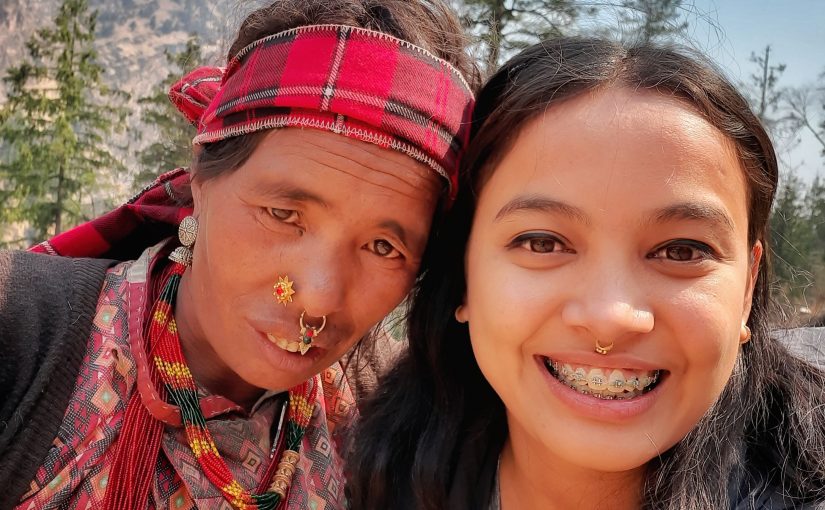
also took a selfie together and she shared with me boiled potatoes which she
was having for lunch.
If you have a bulaki on your septum, and you meet another person with one too, you are friends already. This is what Bulaki Code means!
I had been to Rara on April 2021. My journey to Karnali Pradesh began from 7th April. It was a part of a field trip and we were on a private Pick-up Jeep, so I do not know about local vehicles and the routes and their prices. Besides that, the major things to consider while making a trip to Rara are here in this blog.
A house in Kalikot
You might know about the gem of Karnali Pradesh – Rara Lake. It is a part of a 106 km2 Rara National Park at an altitude of 2,290 meters. People usually take two flights to reach this place: Kathmandu to Nepalgunj and Nepalgunj to Jumla. From Jumla, the off-road begins. There are two ways to reach Rara via Jumla, one is a newly made off road which is comparatively shorter. I will brief you how to reach Rara via road form Kathmandu.
In front of Rara Lake
Before sharing further information, keep this in mind, the lake is not as elegant as it has been mentioned all over the Internet. I do not want to give you false hope. It is just another “Begnas Lake” in the mountain region, but the journey to the lake is what matters. It is said that Rara changes colors, and though she looks calm and gentle on the surface, but is as deep as 167m! I was slightly disappointed after reaching the lake, then I realized I had made a lot of memories, met several kind hearted people, enjoyed new dishes, shared culture and laughter, and that’s what matters at the end of the day!
In front of Rara Lake
Information
about Rara Lake:
District: Mugu
Region: Rara National Park, 106 km2
Altitude: 2290 m
Maximum length: 5.1 km
Water Volume: 10,682 m3
Depth: 167m
Specialty: 1074 species, 51 – mammals, 214 – birds, color changing lake
Activities at Rara Lake: Horse-riding, boating, hiking, photography
Prohibited things at Rara Lake: Fishing, swimming, throwing garbage
Jumla
Itinerary:
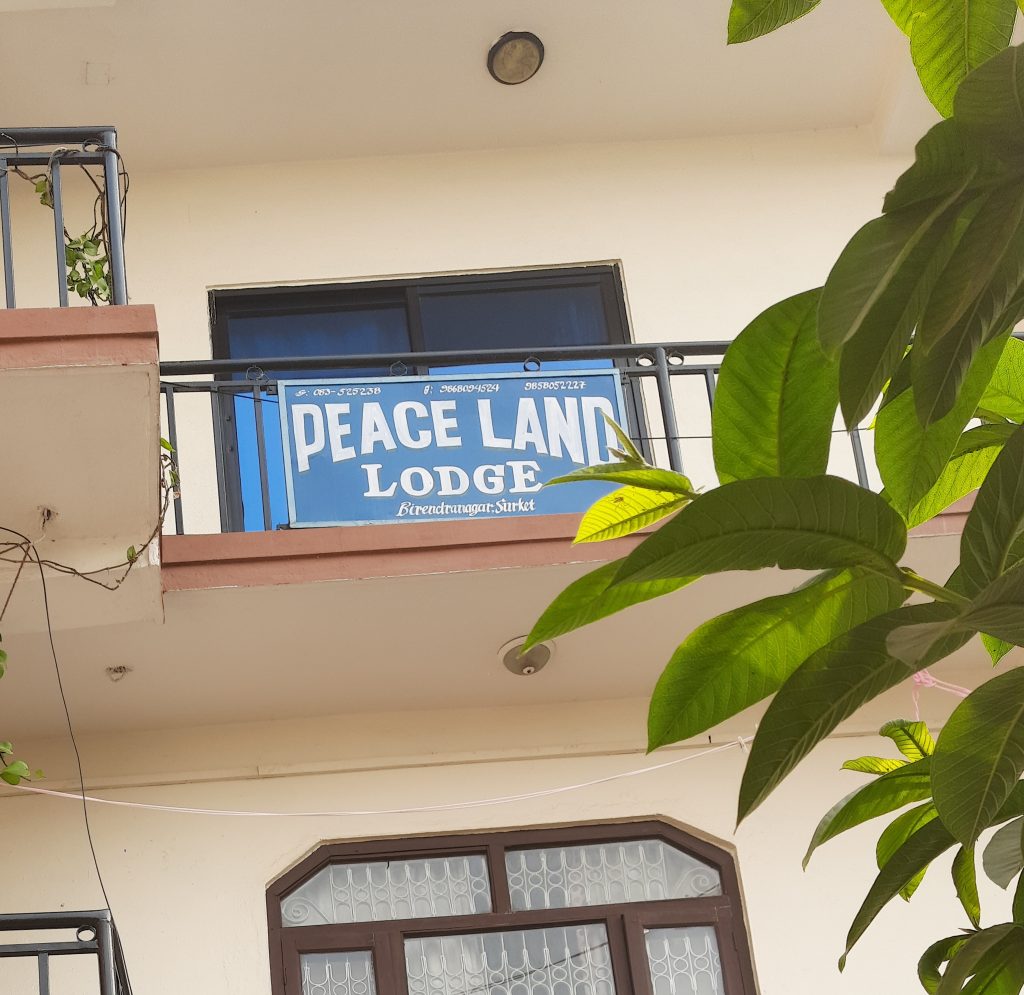
Day 1: If you have your own vehicle like jeep or bike, starting at 6:00 am, you can reach Surkhet by 8:00 pm or 9:00 pm. It is best to book a hotel beforehand as it is not a popular city by night time. It is not fun if you are not with an enjoyable company because most of the time you are inside the vehicle. We stayed at Peace Land Lodge, Birendranagar. (Contact: +977 9868094524)
Hotel at Surkhet
Day 2: If you do not want to do sightseeing of Surkhet, it is recommended to begin the second day drive as early as 6:00 am. By 4:00 pm you will reach Manma. You can have lunch on your way to Manma. We had ours at New Karnali Riverside Hotel and Lodge, Tallo Dhungeshwar, Dailekh. It has a great view of Karnali River and there’s a hanging bridge too. After crossing Dailekh, we reached Manma. It is a place at Kalikot. We stayed at Hotel Kot Durbar (Contact: 087-440034)
The room and lunch/dinner prices were reasonable like NPR 1000 and NPR 200 to 400 (depending upon veg and non veg food) respectively.
Day 3: It is recommended to start early, because on your day 3, you will reach Mugu if you speed up. We started at 8:00 am in the morning after a light breakfast and crossed Jumla and entered Rara National Park. We had lunch at Kalikot and dinner at Mugu. The thing is, you can enter inside Rara National Park till 6:00 pm only. So, hurry up and make sure there’s a booking of your hotel rooms beforehand.
Day 4: We reached Rara after 10 minutes’ drive from hotel at the parking lot of Rara and after a short hike of another 20 minutes we made it to the lake. Make sure you reach the lake around 7:00 am so that you can do boating. We missed it. You can do horse-riding. For those who want to skip hiking, horse-riding is available. I didn’t do the horse-riding because I’m against animal cruelty.
Jungle just before Rara Lake
These routes
and vehicle mentioned in the itinerary is for a private jeep. Not all kinds of vehicles
can make it to Rara as the road is difficult. You can find excavators on your
way which can delay you by hours. The construction works are rapidly taking
place and I think the condition will be worse when monsoon begins. So, make a
better research, book hotels beforehand, carry enough water and food with you,
and go in a group.
Things to
remember/consider:
Rara lies in Mugu, and you need to know about the people in Mugu. They are generous and friendly, but not hygienic. Make sure you have extra bedsheet that you might want to wrap before sleeping in the homestay of Mugu. I had to face that problem.
You might not find stores between two villages which might be located at a distance more than 50 km on your way to Rara! So, it is better to carry enough food and water with you.
Little girl at Kalikot
Carry warm clothes no matter what season or month you visit Rara to protect yourself from cool breeze in the evening.
Carry first-aid and medicines as you might not find any health facilities once you are on the hills and away from the headquarter.
Carry power bank for your gadgets as some places in Karnali Pradesh has no electricity supply. Even there’s no network so you might be contactless for a while.
Beautiful house in Jumla
If you want to know more in detail about Karnali Pradesh, there’s another blog in my website: www.blog.aleenarayamajhi.com.np
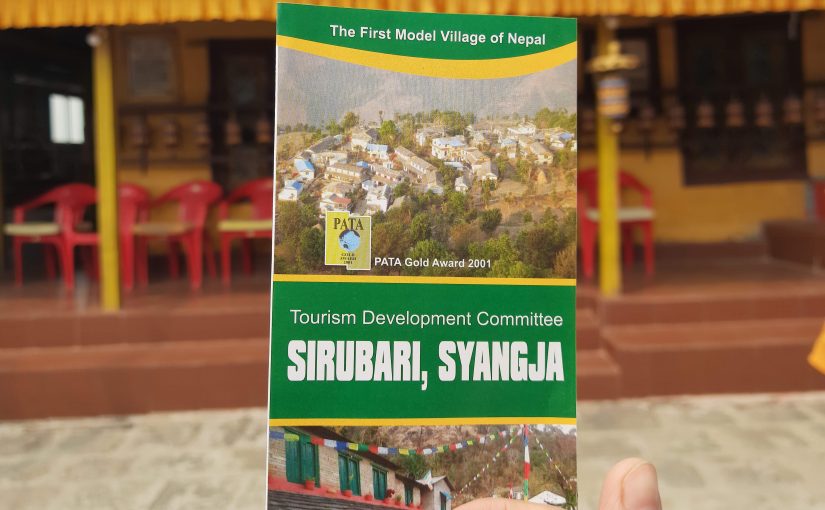

I had been to Sirubari last weekend during the festival of colors – Holi on March after two years of planning! I found more than what I had expected with Sirubari. As it is the first homestay village in Southern Asia, it has well managed committee with 27 houses that serve as homestay. Its capacity is around 150 people and it receives 100+ people every day from different corners of Nepal and from outside Nepal. Though you cannot find any mountain views from this village, you can still witness some exotic weather fluctuations and outstanding cultural vibe.
If you are planning to make a refreshing trip away from busy cities, it can be a perfect destination for you. I have tried to put down some points in this blog that might be helpful for you to plan a trip to Sirubari!
Specifications:
Altitude: 1700 m above sea level
District: Syangja
Specialty: First homestay in Southern Asia
Duration: 4 hours (from Pokhara)
Vehicle supported: Bike, mountain bike, jeep, bus
Public vehicle available: local bus, jeep
Things To Carry:
Raincoat
or umbrella
Extra
pair of clothes and socks
Flip-flops
Snacks
(if you crave anything that might not be available in village like in big
cities)
Medicines
Things To Wear:
Light
and loose clothes
Sun
hat
Sunscreen
Specialties:
Comfortable, well facilitated rooms
House of cultural and historical importance
Delicious food, local rooster, local alcohol,
cultural cuisine
A closeness and warmth of family
Cultural dance performance by committee
Panche-bajaa welcome by committee
Can wear Gurung cultural dress
Route & Vehicle Details From Pokhara:
Pokhara – Naudada – Karkineta – Sirubari (jeep or bus)
Pokhara – Badkhola – Daraun – Sirubari (jeep or bus)
Pokhara – Helu – Arjunchaupari – Sirubari (jeep or bus)
Pokhara – Naudada – Bejang – Sirubari (jeep or bus)
Pokhara – Helu – Rapakot – Sirubari (jeep or bus)
Pros of making trip to Sirubari!
You can
finish this trip over a weekend! All you need is one day from Pokhara and the
trip is over.
Despite
all the rainfall in the morning, off-road route, and no Wi-Fi, I enjoyed this
homestay experience as it was well managed.
It is a perfect
destination for refreshing stay either solo, with friends, families, or for
couples.
You get
nice hospitality in the homestay. Plus, it is super cheap. As there are people
of the committee who decides where one shall be placed, the prices do not
fluctuate from one house to another and overall, the stay comes under NPR 3000
per person.
This I
would call an underrated village. Though it is the oldest village that started
as homestay in Nepal, the place is still unnoticed and does not receive more
than 150 people per day.
Well,
who would not like to flaunt “I have been to the first homestay village in the
Southern Asia”? Of course everyone would love that. So, go there!
There is
no chance you get to buy a coke or snicker after you reach the place as it is a
village away from modern stores and stuff. So, carry whatever you might crave
during the stay. Well, carry your wrappers back with you!
Local
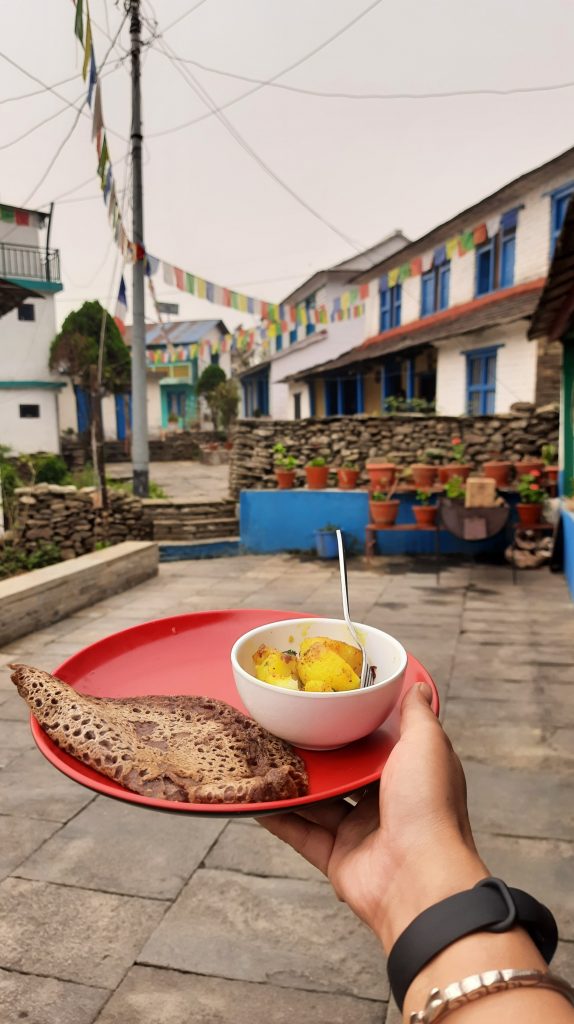
kodoko raksi, Nepali tato khana, cool breeze, perfect weather, and satisfactory
hike, and what else? You will get cultural experience as a bonus!
Contact Info:
Make sure you book your homestay at Sirubari one week ahead so that you get proper services. During peak months like October and November, it might be difficult to get accommodation so make pre-bookings. Capt. Purna Bdr. Gurung (Treasurer): +977 – 9846122946 Sunil Gurung (Secretary): +977 – 9846176991
Hope this article helped you in some ways. Even if this one is your first time in Nepal or in village of Nepal, you need not panic, it is not as awkward as you think! If the blog was worth reading, do share and leave your feedback.
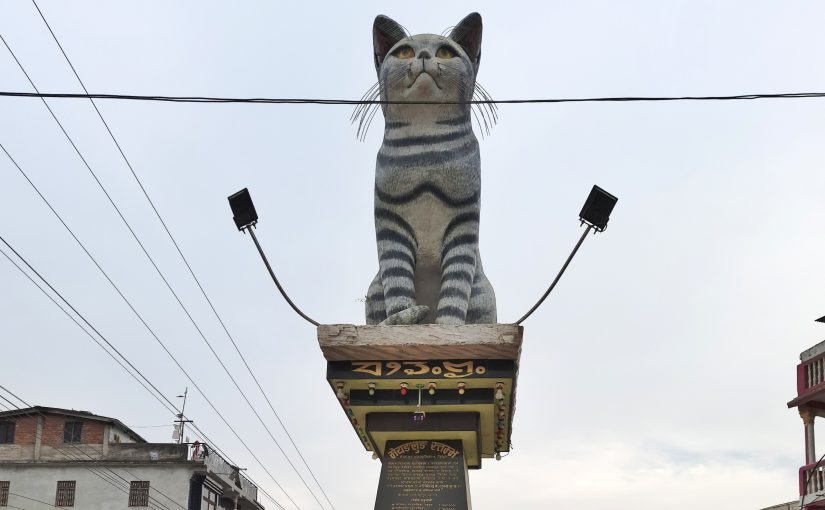
The title of my blog refers to the picture attached here that shows a sculpture of a cat in the middle of the street that stands not less than 10 feet. In one of my recent solo trips to Tehrathum – hilly district of Eastern Nepal, I had made a one-day stay at Myanglung. Myanglung is the headquarter of Tehrathum that lies at 1,500 meters above sea level.
Stepping out of the bus after a 2.5 hours long trip from Sidhuwa Bazaar, Dhankuta at Myanglung, I was fascinated by the cat sculpture in the middle of the main highway. The first thing that came to my mind was: “So, cats do rule some part of the world!” I didn’t stop myself from not taking its picture and was eager to find out the story behind the giant cat sculpture that stared right in my eyes.
I asked several people that day, during my work, about the story behind the giant cat. Well, none could tell me anything besides their assumptions and theories. Later, after my day’s work was accomplished, I was able to meet an elderly who was recognized as one of the popular leaders of Myanglung. I didn’t wait any moment and asked him about the giant stone cat in the middle of the highway. He smiled and began the story. It goes like this:
It is a mythical story that is about a century old. Three porters were coming to Myanglung from Terai, carrying heavy loads in their back. The roads were not proper and vehicles did not run in those times. The sun was about to set when they reached near Myanglung. So, those three porters decided to stay a night in the same place.
One of the tired porters collected few white stones to make a chimney for a fire. After he had arranged those stones, he added little firewood, then put a utensil over it, and lighted the fire. Surprisingly, one of the stones showed a sudden movement. The porter was too tired so the imbalance of the stone made him angry. Therefore, he lifted his Khukuri (Nepali knife, bigger than the kitchen knife), and hit the stone with it to let go of his frustration. Another minute, the stone that was moving previously, started bleeding. It was a horrific scene. All three porters were scared to death, so, they left the place immediately.
The next day, villagers that found out what had happened to the porters, went to the same place. They discovered redness over the stone which was cut with Khukuri. Since that day, there were meowing sound during the night time, and children began to disappear. The villagers were frightened but did not know how to heal the situation. One morning, a person from the village collected everyone and told about the dream he saw last night. He explained how a Hindu goddess was crying in his dream and wanted to be worshipped. After hearing about the person’s dream, the villagers took it as a sign from the deity and decided to worship the stone that had bled previously. They carried it and put it over a huge stone and started worshipping it every day. Finally, the meowing sounds in the night disappeared and no other terrific incidents took place afterward.
The place was later named Myanglung or Myaaulung. Myanglung comes from Limbu Language and is made up of two words: myaau and lung which mean cat and stone respectively. It explains the popular incident of the bleeding stone that cried like a cat that took place a century ago. One can still find the remains of the stone which is covered with roots today in Myanglung. Though the story sounds unusual and impossible, one cannot deny the fact that the majority of the locals in the area believe it.
If you ever come to Eastern Nepal, do not miss this place. After all, history and mythical stories make us excited and we should respect them. Believing one is totally up to you!
Altitude: 3636m Location: Ilam Border at West Bengal Vehicle: Bike and jeep Road condition: poor, off-road Trip Duration: 1N 2D (as per feasibility)
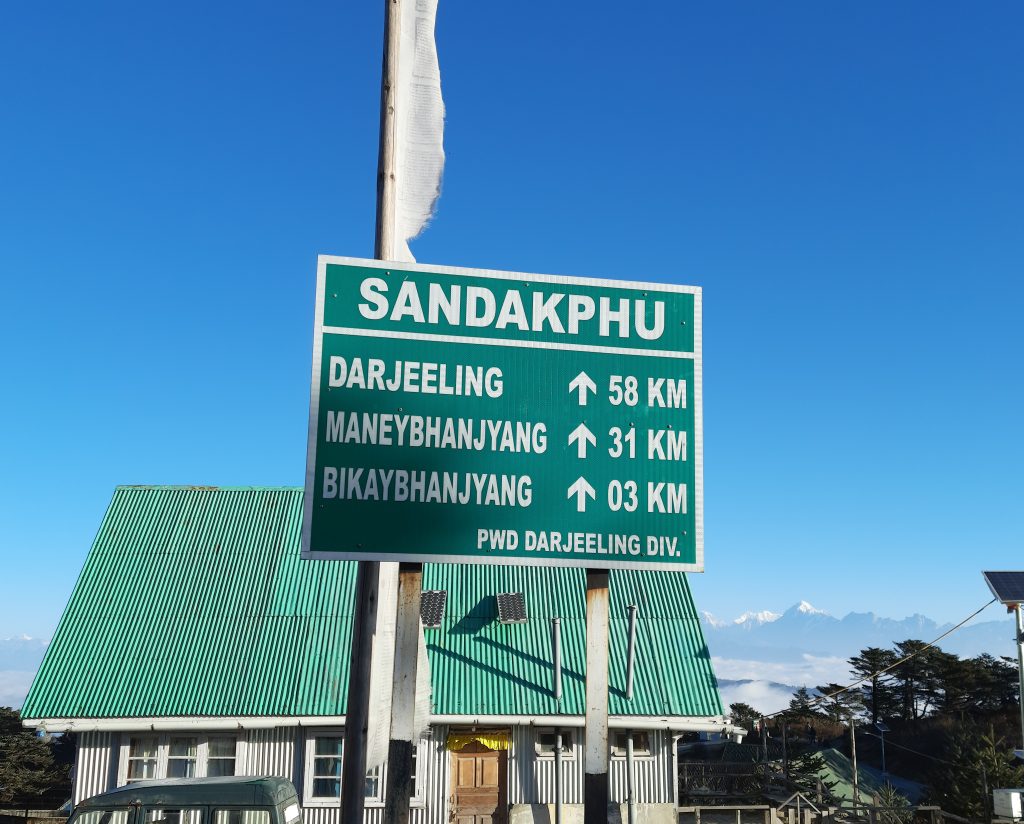
Sandakphu is a popular Eastern destination in Nepal. It is commonly known as Sandakpur in Nepal and the endpoint of Sandakpur is known as Sandakphu. Well, you can find plenty of blogs on the Internet that give you details about the trip via the Indian route or Indian side. In this blog, I’m making sure that the people who are willing to experience the place via the Nepal side (Ilam) can reach Sandakphu with ease with the help of this blog. Trust me; it is not that easy if you go unplanned. I went to Sandakphu this week, without plans, and it was tough. So, I’m here to guide you so that you do not have to go through any troubles.
If you are anywhere away from East, that is, away from Morang, Sunsari, Jhapa, or Ilam districts, you need to first reach here. Our trip began from Dharan (Sunsari). One has to reach Ilam Bazar to begin the trip. We took the first public bus from Dharan at 5:00 am and reached Ilam Bazar at 11:00 am for the price of NPR 650. You can find buses or jeep to Ilam Bazaar. Then, at Biplate, Ilam, we had our Travel Agency waiting for us.
Yes, we took a package from Ilam Bazaar to Sandakphu and back which was for 1 night and 2 days. It cost us NPR 3500 per person. Under this package, we were provided two times meal and tea on the first day and the second, breakfast and lunch. I think the package price was worth it as the distance from Biplate to Sandakphu (48 km) was difficult and troublesome. Fortunately, our jeep driver was experienced and made our trip safe.
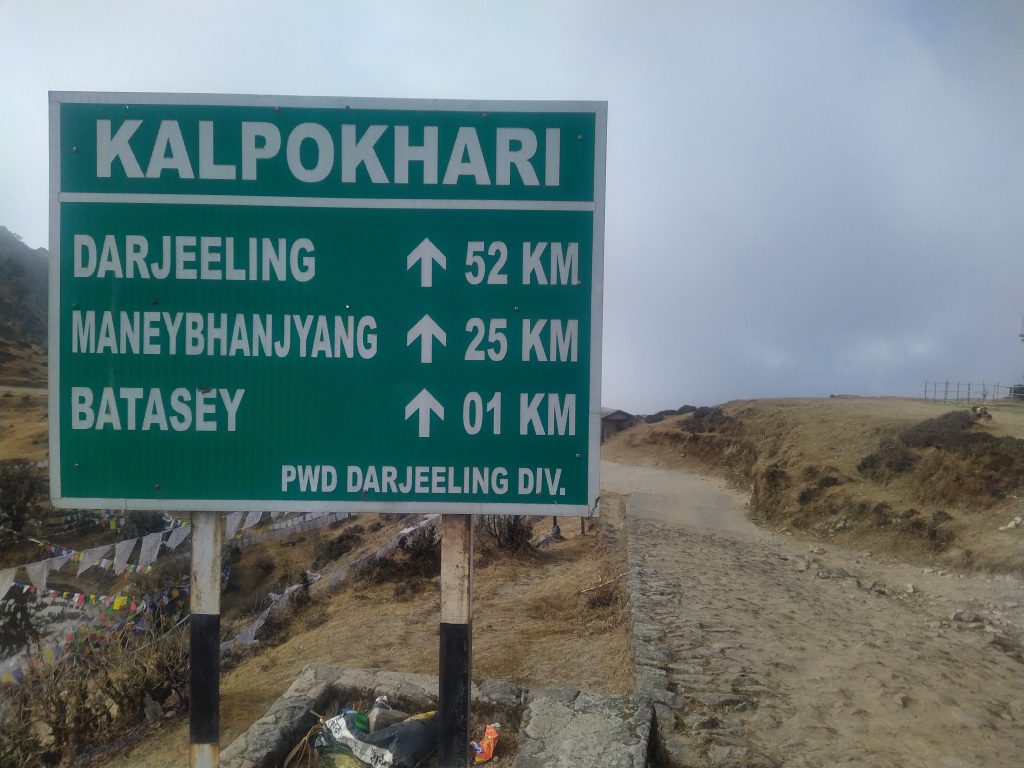
It takes 4 to 5 hours to reach Kalapokhari. It was our last destination of the day. It is named after the Pond. The good thing is it didn’t snow. As we made a trip in January, snow was predicted. Surprisingly, despite the temperature drop of -6 degrees Celsius, it did not snow.
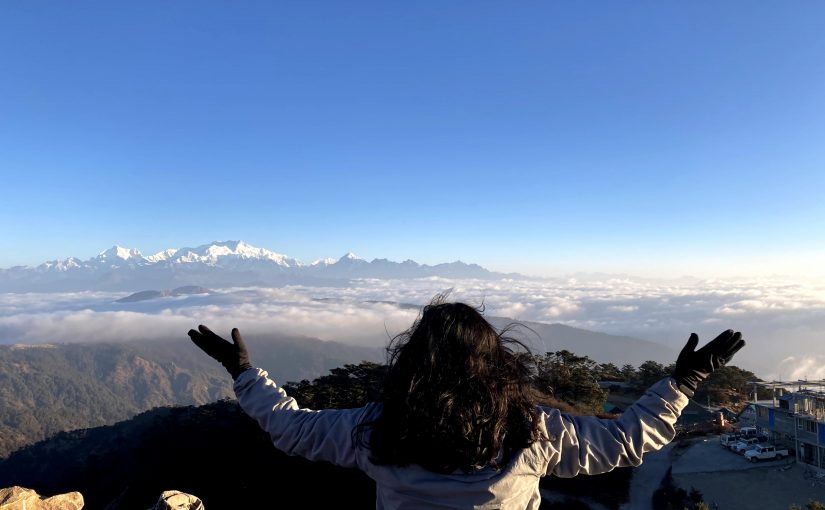
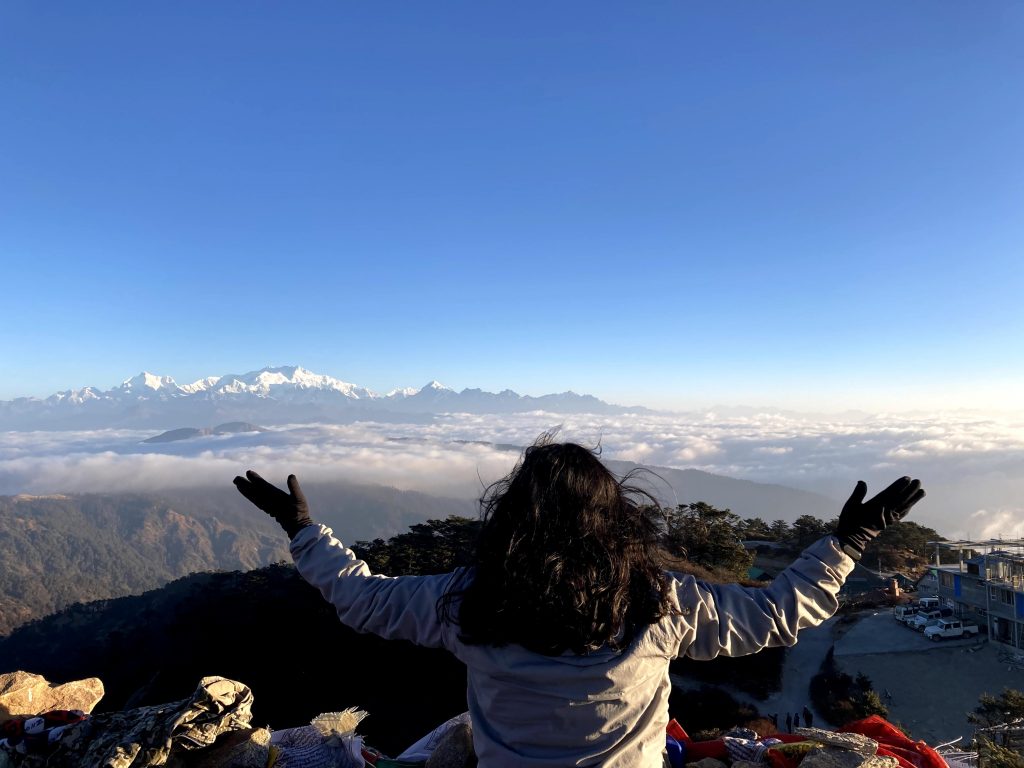
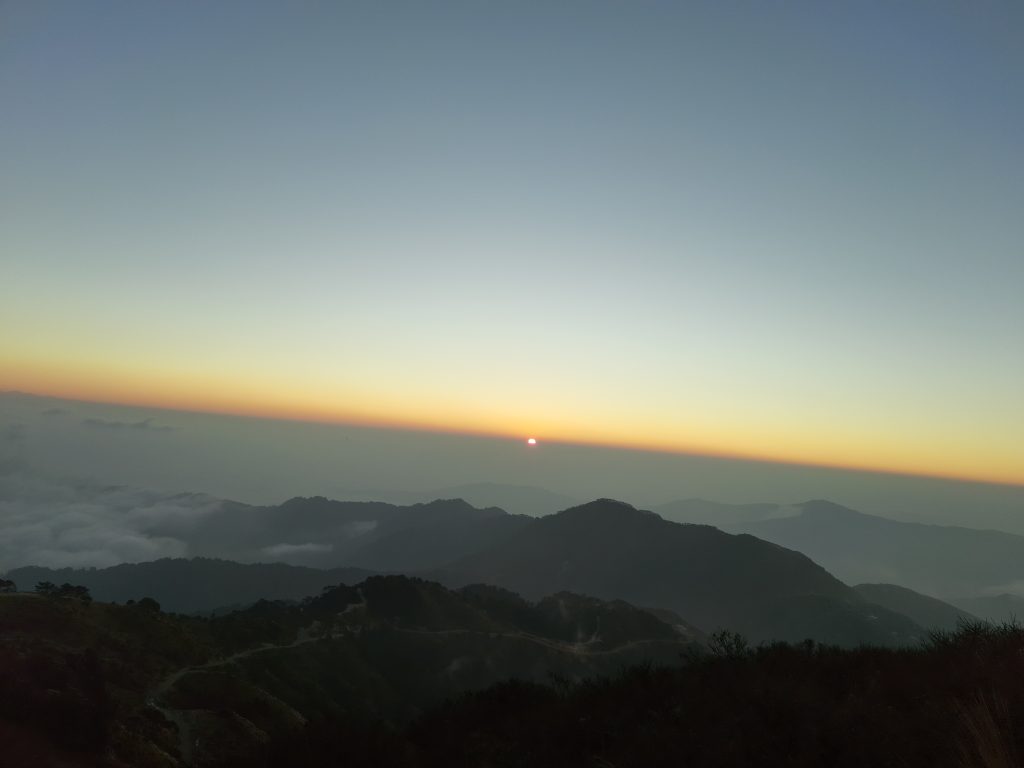
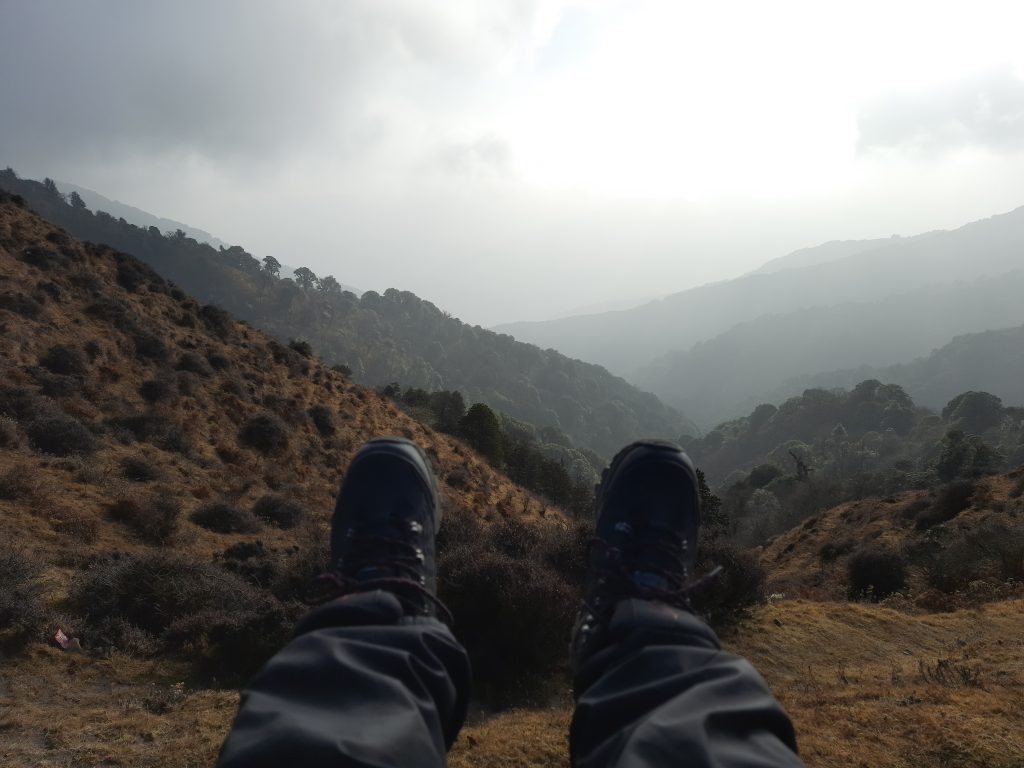
On the next day, we woke up at 4:30 am and took off to Sandapkhu at 5:00 am. After a jeep ride of an hour or two, we reached Sandakphu. There’s a little hill on Sandakphu which one must climb to witness heaven. The hilltop was full of a cool breeze. It felt heavenly. As it was a sunny morning, we did not feel much cold. After half an hour, we returned.
Food:
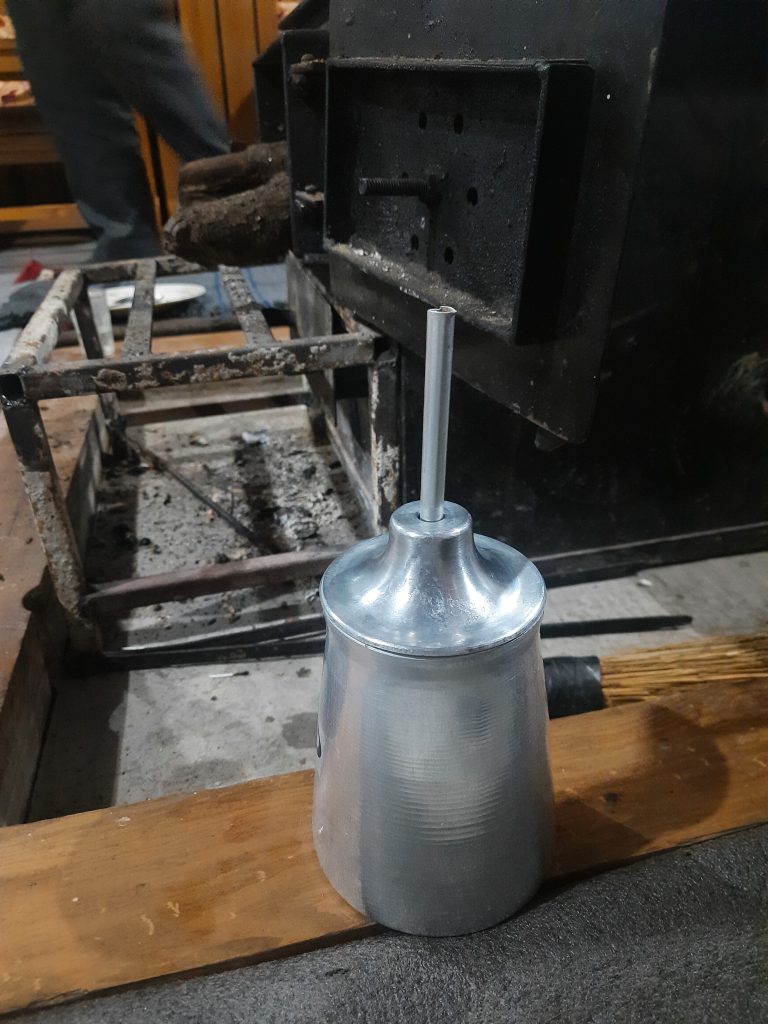
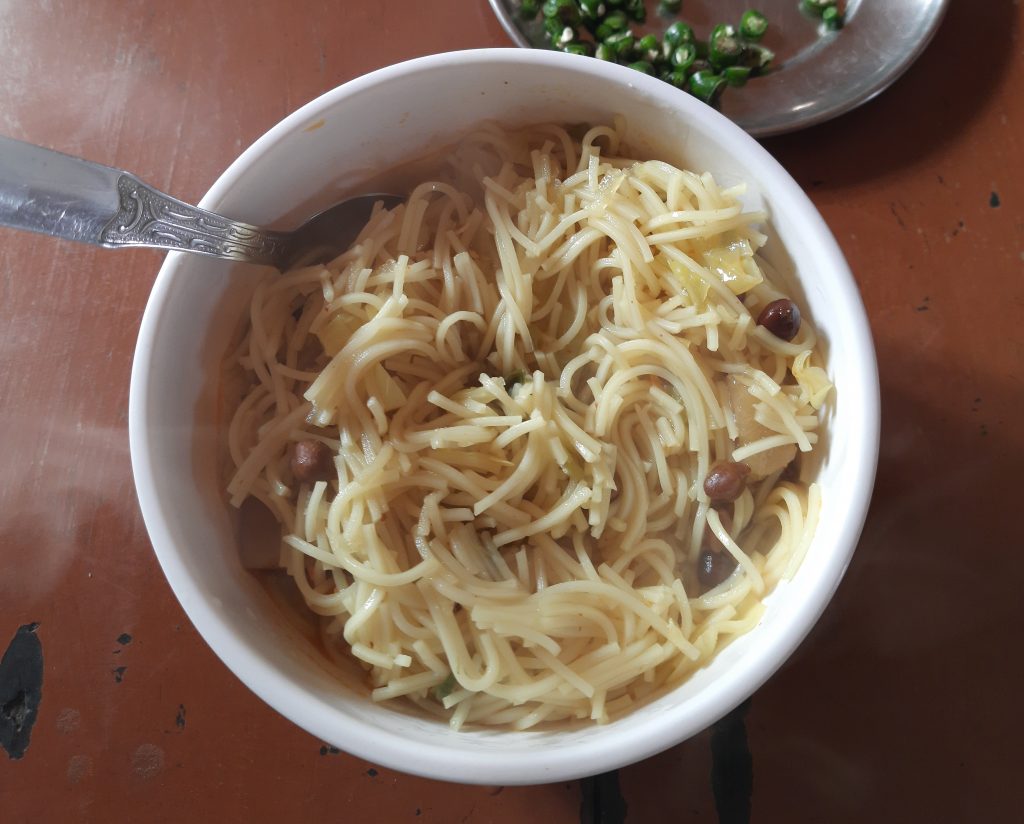
You will find good food at Sandakphu, Kalapokhari, and Ilam Bazar for a reasonable price. The specialty of the place is Tongba (local booze) which comes with aluminum straw in a wooden bucket for the price of NPR 200.
Accommodation:
If you go on busy times like October to January, you might have to make an early booking for lodging. The rooms are not as clean and comfy as in cities, but they are good enough to provide you warm sleep. The toilets again are not that clean and you might have to compromise with a squat toilet.
Things to Carry:
Torchlight
Ginger (to avoid altitude sickness)
Medicines (headache, vomit, etc.)
Extra jacket, woolen cap, gloves, socks (nights are super cold)
Polythene bag (in case you want to vomit while in a jeep)
Toilet roll
Budget Allocation from Dharan to Sandakphu and back:
Public vehicle and reserve jeep (if 8 people): NPR 2500 per head
Food: NPR 350 to NPR 500 per meal
Tongba: NPR 200 per bucket
Breakfast: NPR 250
Hot water: free
Overall, for the price of NPR 7000, I was able to have an amazing trip to Sandakphu from Dharan. My expenses included two nights’ stay at Dharan and one night stay at Kalapokhari along with meals and travel prices.